
Tree Roots Under Pavers: How to Repair and Prevent Damage
Tree roots under pavers lift, tilt and crack your surface. Learn how to spot the damage, repair it and prevent it. Call AllBrick Pavers at +1 407-818-7876.

Rael Lara

Tree roots under pavers push the surface up from below. As a root grows and spreads outward, it lifts the pavers above it into a ridge, tilts them, opens gaps between them and leaves low spots beside the lift. The fix is to correct the ground around the root and relay the same pavers, and prevention starts with how roots, water and paving share the yard.
This guide looks at tree roots under pavers from the homeowner's side: how the damage happens, how to recognize it, what to do and not do before you call a crew, how a repair near a root differs from an ordinary settling fix and how to lower the odds of a repeat. If you want the broader view of repair work in our area, start with our overview of paver repair in Central Florida. If your pavers are dropping instead of rising, start with why are my pavers sinking.
What Do Tree Roots Under Pavers Do to Your Surface?
Tree roots under pavers lift the surface from below, and the damage builds quietly before it shows. Over several seasons a growing root shifts the soil around it unevenly, and the pavers above have nowhere to go but up. The result is tree root damage under pavers that appears in several ways:
- A raised ridge or hump that follows the line of the root.
- Pavers that tilt, with one edge higher than its neighbor.
- Gaps that open along the lift as the pavers separate.
- Cracked or chipped edges where one paver is pushed against another.
- A low spot beside the lift, where the soil has shifted.
Water often plays a part as well. A leak, a downspout or a sprinkler head that keeps soaking one spot softens the ground there, which is one reason a lift from a root so often sits right next to a dip.
How Can You Tell Tree Roots Are Lifting Your Pavers?
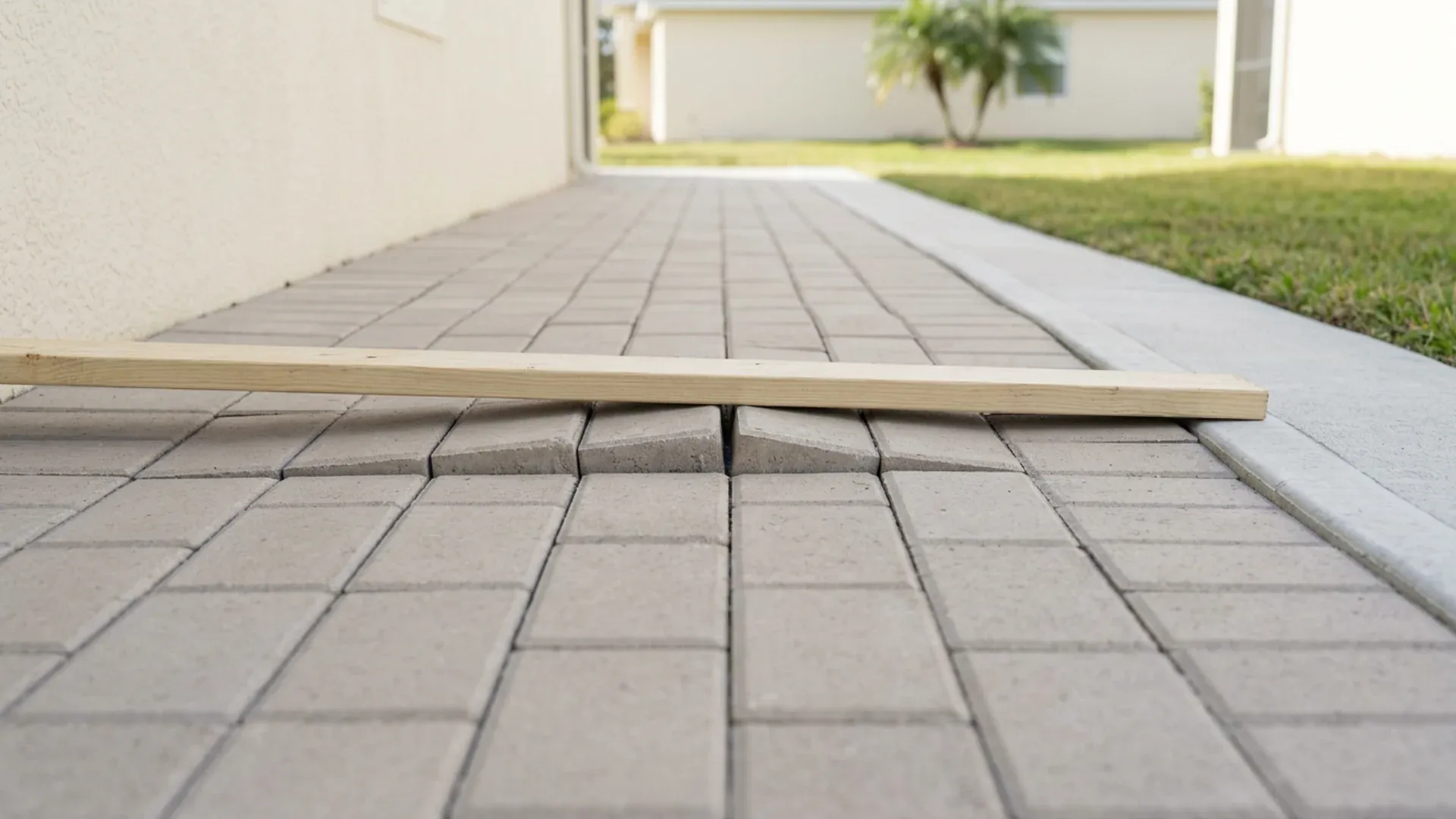
You can tell tree roots are lifting pavers when the raised area runs in a line toward a tree, a large shrub or a stump, and gets higher the closer it gets. Pavers lifted by tree roots look different from pavers that have sunk, so a short walk around the yard gives you most of the answer.
- Walk from the tree toward the house or pool and look for a ridge or a run of tilted pavers.
- Lay a long straight board across the area. A hump under it points to a lift, while a gap under it points to a dip.
- Take a photo from the same spot after each storm to show how fast the area is changing.
- Note whether a downspout, a sprinkler head or a leak sits close by.
If you see both a ridge and a dip, expect more than one cause, and compare what you see with our paver repair signs checklist.
Can You Cut Tree Roots Under Pavers Yourself?
Cutting tree roots under pavers is usually not a do-it-yourself job. Cutting a large root can harm the tree and may leave it less stable, and digging without a plan can hit buried utilities. What happens to the tree is a decision for a certified arborist or another tree professional, not a quick weekend cut.
Here is what you can do while you wait for a site visit:
- Do not force the raised pavers back down. It can look better for a few days without fixing what lifted them.
- Phone 811 before anyone digs near the area, so buried utilities get marked.
- Ask a tree professional whether the root can be trimmed and what that does to the tree.
- Check your HOA and county rules before any tree is trimmed or removed.
- Mark any raised edge that catches shoes so nobody trips.
Once the tree question has an answer, the paver work can plan around it.
How Do You Repair Pavers Lifted by Tree Roots?
To repair pavers lifted by tree roots, a crew lifts the raised section, corrects the ground around the root and relays the same pavers in their original pattern. Pushing a raised paver down only hides what moved it. A root repair differs from an ordinary settling fix in a few ways:
- The root question comes first: a tree professional decides whether it is trimmed or left, and the plan follows.
- Photos and markings map the lift, so the crew knows which pavers belong to the ridge.
- Pavers come out in order, and cracked ones are swapped for color-matched units.
- The ground along the root's path is rebuilt firm and level.
- The final check follows the water, and a nearby downspout or sprinkler head gets flagged.
Single pavers can be lifted and replaced without disturbing their neighbors, so a root problem rarely means redoing the whole surface. Our pavers repair service page covers repair work in general.
How Do You Prevent Tree Roots From Lifting Pavers Again?
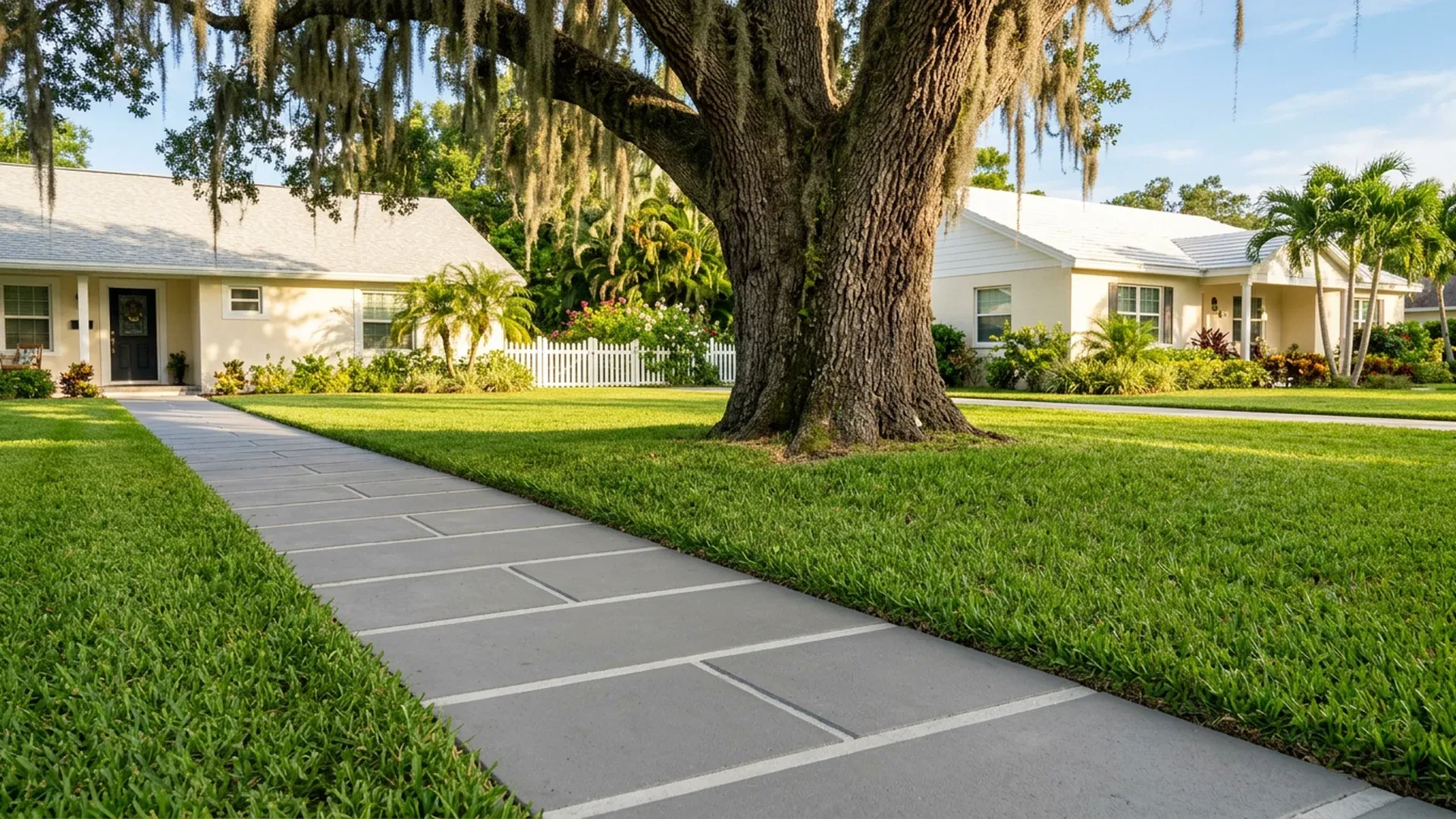
To prevent tree roots from lifting pavers again, manage the water near your paving and plan new surfaces around the trees you already have. A repair beside a living tree can still move if the root keeps growing, so these habits matter:
- Fix leaks and point downspouts and sprinkler heads away from the paving, since water that soaks one spot keeps softening the ground.
- Share the position of mature trees, and the ones that will keep growing, when you plan a new patio, walkway or driveway.
- Leave open planting space around a trunk instead of paving right up to it.
- Walk the yard after major storms and photograph any new ridge, tilt or gap.
- Call early. A small lift is almost always a smaller repair than one that has spread.
For more on how water moves around a paved yard, read our guide to backyard drainage solutions and how pavers help.
When Is Root Damage Under Pavers Urgent?
Root damage under pavers turns urgent once it spreads, comes back or becomes a hazard. Raised pavers are a trip hazard on a walkway, an entry or a pool deck. Book a visit soon when you notice any of these signs:
- A ridge shows up fast or keeps growing after rain.
- A raised edge catches shoes or sits where children and older family members walk.
- Tilted, loose or cracked pavers now reach beyond a handful.
- An earlier repair in the same spot is rising or shifting again.
- The lift sits near the house, a garage entry or a pool deck.
- Water now collects beside the ridge.
If you are unsure, send photos and ask. For a closer look at a typical project, see how local homeowners handled patio paver repair in Haines City. Our walkthrough of sunken pavers repair in Central Florida covers the dips that often sit beside a lift.
Tree Roots Under Pavers FAQ
Will tree roots under pavers lift them again after repair?
Not necessarily, but no contractor can promise it will not happen. If a root keeps growing under the repaired area, pressure can return. Correcting the ground, managing water and planning around mature trees give the repair its best chance, and a site visit shows how close the root sits.
Do I have to remove the tree to fix pavers lifted by roots?
Not always. Whether a tree is trimmed, treated or removed is a call for a tree professional, and your HOA or county may have rules, so ask them first. The paver crew focuses on lifting the pavers, correcting the ground and relaying the surface around what the site visit finds.
Can I repair pavers lifted by tree roots myself?
A single paver nudged up slightly may be manageable, but pushing it down does not fix what lifted it, and digging without calling 811 can damage buried utilities. For a ridge, a run of tilted pavers or a lift growing toward the house, ask a crew to take a look.
Get a Free Look at Tree Roots Under Pavers
If tree roots under pavers are lifting your driveway, patio, pool deck or walkway, the fastest answer is an on-site look. Call AllBrick Pavers at +1 407-818-7876 for a free consultation. Our team will inspect the raised area, walk you through what is happening and map out the repair for homes in Lakeland, Auburndale, Haines City, Davenport, Winter Haven and the surrounding area.
Have your photos ready, plus roughly when you first noticed the ridge and where the nearest tree and downspout sit. Browse finished projects in our gallery, or read how the work is handled on our pavers repair service page.

About Rael Lara
Rael Lara is the founder of AllBrick Pavers, Central Florida's leading paver contractor, transforming outdoor spaces with precision and lasting quality since 2018.