
Why Are My Pavers Sinking? Causes and Fixes in Florida Soil
Why are my pavers sinking? Match what you see to the likely cause, from roots to water, and learn what a repair visit involves. Call +1 407-818-7876.

Rael Lara

Why are my pavers sinking? In most Central Florida yards, pavers sink because the soil underneath has softened, settled or shifted, and the pavers on top simply follow it down. The dip you see is only the symptom. The cause sits below the surface, and it usually points to water, roots, a leak, a heavy load or ground that was not prepared firmly enough when the pavers went in.
This guide takes the homeowner's point of view. It starts with what you can see and feel, matches those clues to the most likely group of causes, and then explains what happens when a crew comes out. For the full picture of the service, read our guide to paver repair in Central Florida. For a step-by-step look at the repair itself, see sunken pavers repair in Central Florida. For another overview of causes and prevention, read why pavers sink and what to do.
Why Are My Pavers Sinking? What Uneven Pavers Tell You
The shape of the dip tells you where to look first. Uneven pavers usually fall into one of four patterns, and each points to a different group of suspects.
- One low spot: usually a local cause, such as a root, a leak or a downspout.
- A dip along the path of a vehicle: usually a heavy load that the ground was not prepared for.
- A low corner or edge where water gathers: usually a drainage problem.
- A wide area that has lowered gradually: usually ground that is settling.
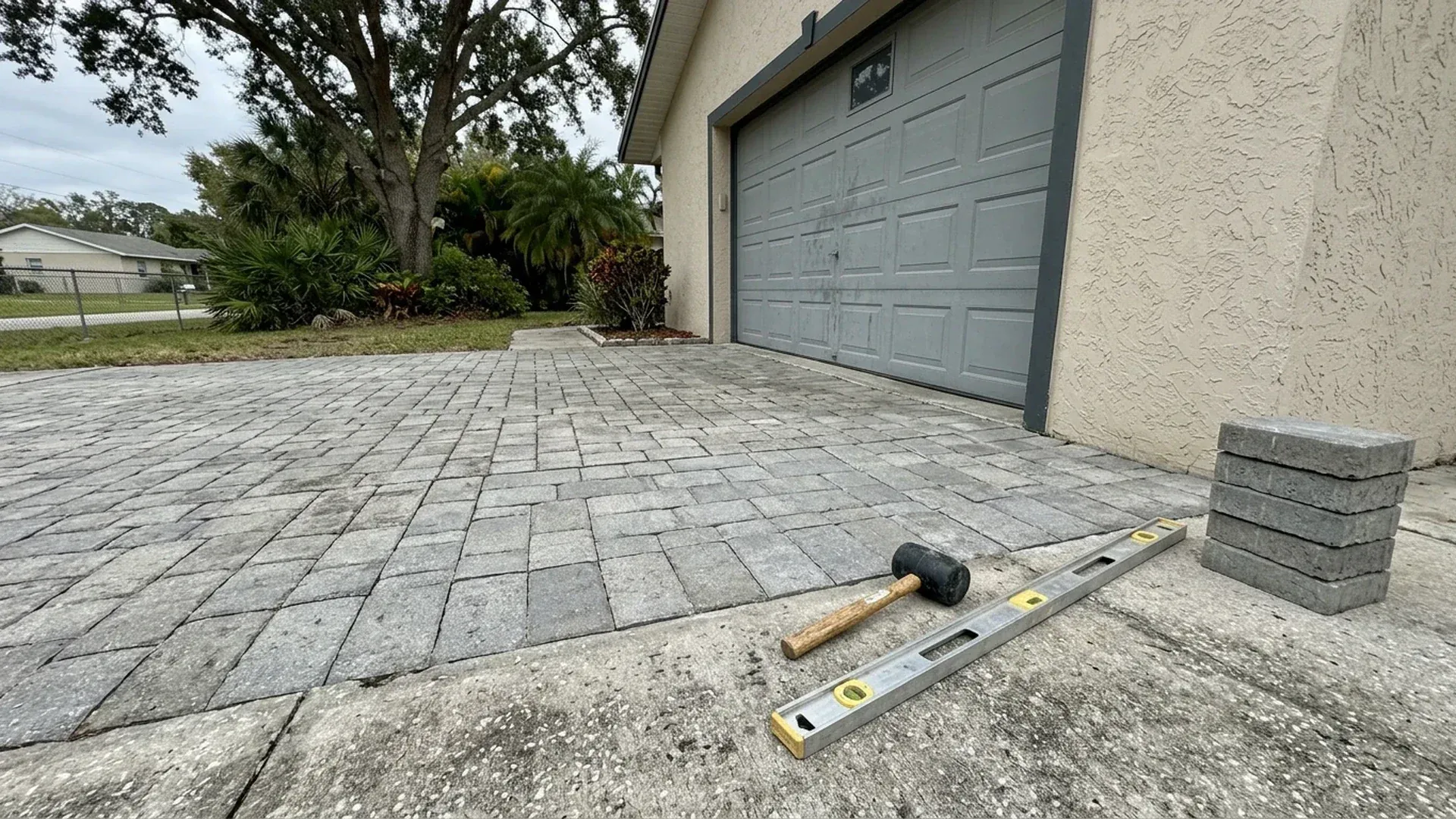
To confirm the surface has dropped, lay a long straight board or a level across the area. A gap underneath, or a board that rocks, means the pavers have moved. Then take a photo from the same spot after each storm, because a series of photos shows a crew how fast the area is changing.
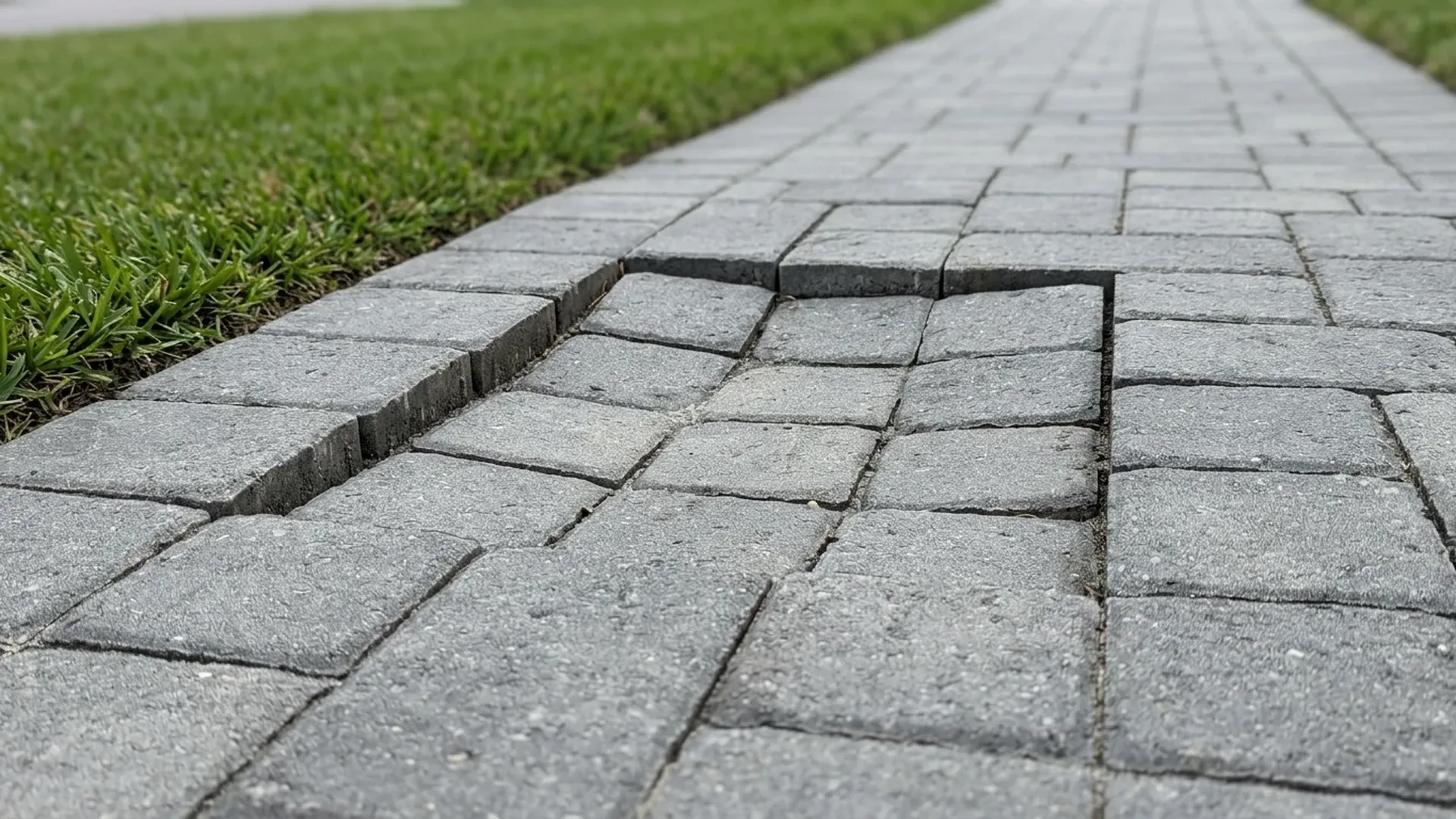
Why Are My Pavers Sinking in Just One Spot?
When you see pavers sinking in one spot, the cause is usually local rather than a problem with the whole surface. Check these four suspects first.
- Tree roots: roots grow and shift, and they can push pavers up in one spot while leaving dips nearby.
- A leak: a broken irrigation line or a leaking pipe near the paved area can soften the ground and make pavers drop.
- A downspout or sprinkler head: water that lands on the same spot every day keeps softening the ground there.
- A parking spot: trucks, trailers and delivery vehicles put more weight on a driveway than it may have been prepared for.
If your dip sits beside a tree, a downspout, a sprinkler head or a regular parking spot, you have found your first suspect. Mention it when you call, because it helps the crew find the cause faster.
Why Are My Pavers Sinking After Heavy Rain?
Pavers sinking after rain are usually telling you that water keeps gathering in the same place. Central Florida's wet season runs roughly from late May through October, and repeated soaking can soften the ground until it can no longer hold the pavers evenly.
Walk the area after a storm and look for a water pattern:
- A downspout that empties onto or beside the paved area.
- Sprinkler heads that spray onto the pavers every day.
- A slope that sends water toward a low corner instead of away from it.
- Puddles that stay long after the rain has stopped.
If a crew relays pavers but leaves the water problem in place, the same dip is likely to come back. For more on how water moves through a yard, see our posts on backyard drainage solutions in Lakeland and rainy season paver layouts for Valrico backyards.
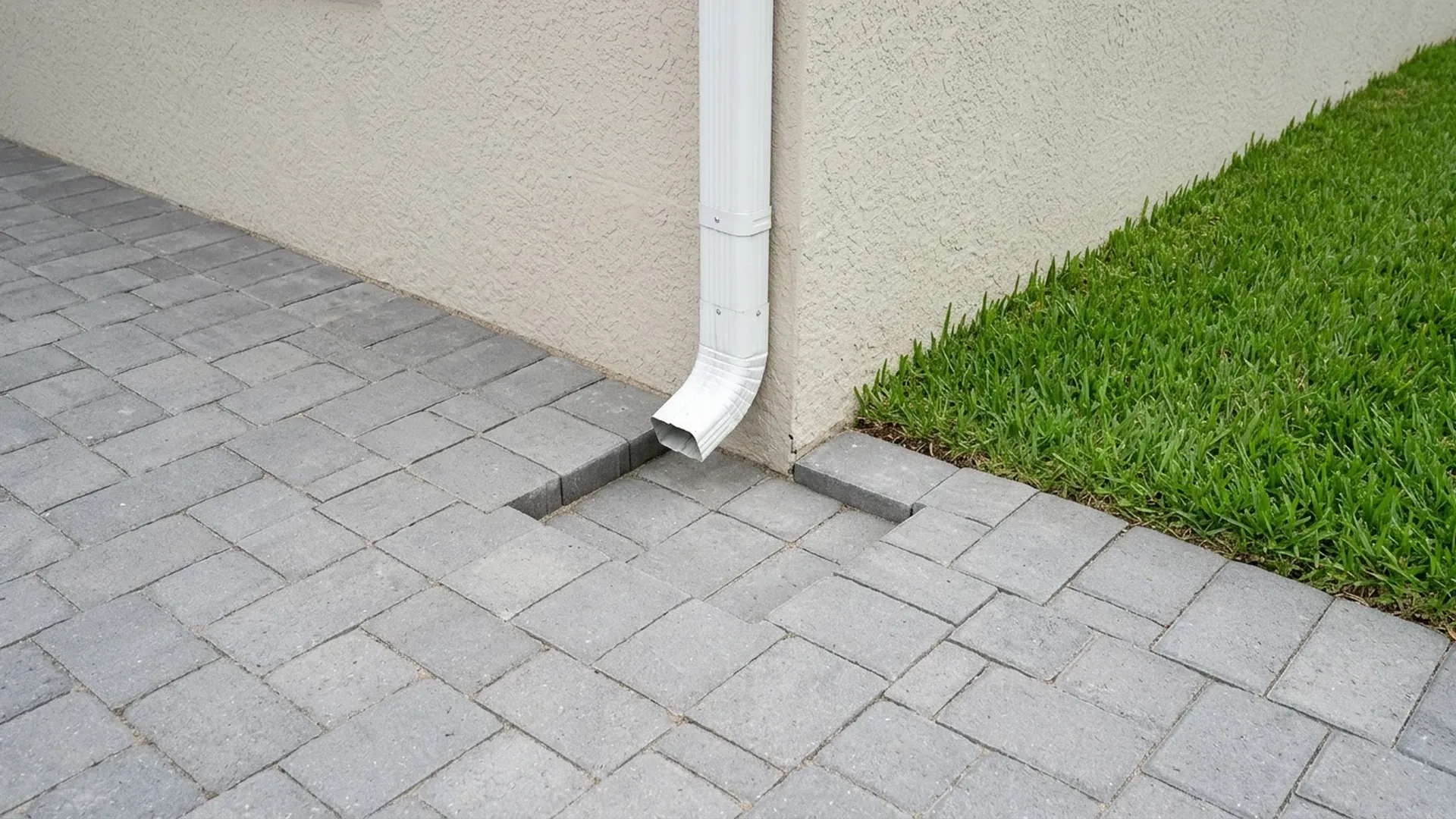
Why Are My Pavers Sinking Across a Whole Area? Pavers Settling Over Time
When a wide area lowers evenly, think about settling. Pavers settling means the ground under the surface has slowly moved down under daily use. It often happens when the ground was not prepared firmly enough at installation, and it shows up as a broad, gradual dip rather than a sharp low spot.
A wide dip does not automatically mean the original work was poor. Weather, roots and heavy loads can also lower pavers that were installed correctly. A crew has to lift a few pavers and look at the ground before anyone can say which cause applies. Guessing from the surface alone is how the same dip ends up coming back.
How to Fix Sunken Pavers: What a Repair Visit Involves
A repair visit for sunken pavers finds the cause first, corrects the ground, and then relays the same pavers in their original pattern. A quick press back into position does not fix why the pavers dropped. What to expect when you call AllBrick Pavers:
- The crew photographs the problem and marks the section that needs work.
- Affected pavers are lifted and set aside in order so the pattern can be rebuilt.
- The crew inspects the ground for softness, water, roots or leaks and plans the correction.
- The surface is rebuilt firm and level, and the pavers are relaid, with damaged units replaced by color-matched ones.
- The slope is checked so water moves away from the house.
No honest contractor can promise a repair will never move again, but correcting the cause gives it the best chance. Learn more on our pavers repair service page.
When Does Sunken Pavers Repair Become Urgent?
Sunken pavers repair becomes urgent when the problem is growing, repeating or creating a hazard. Call a crew soon if any of these apply:
- A dip appears suddenly or grows quickly.
- The same area has been fixed before and has moved again.
- More than a few pavers are sunken, loose or cracked.
- Water collects near the house or a pool deck.
- A raised edge or a low spot is catching shoes.
Central Florida sits on limestone bedrock, and sinkholes are part of the region's geology. A true sinkhole is uncommon and very different from ordinary settling, but a depression that appears suddenly should be evaluated by a qualified professional. Also, always call 811 before any digging, so buried utilities are marked first. If you want a checklist of what to watch for, read our guide to paver repair signs in Central Florida.
Sinking Pavers FAQ
Can I push sunken pavers back into place myself?
A very small, isolated dip may be manageable, but pressing a dropped paver back can look better for a few days without fixing why it moved. Digging without calling 811 can damage buried utilities. For anything larger than one spot, ask a crew.
Will I need to replace all of my pavers?
Usually not. In most cases the existing pavers are lifted, the ground is corrected, and the same pavers are relaid, with only damaged units replaced by color-matched ones. A larger rebuild is considered when damage is widespread or keeps repeating.
Why are my pavers sinking if the installation was done properly?
Heavy rain, leaks and tree roots can soften or shift the ground, and repeated heavy loads press on one spot, even when the original work was sound. The pavers follow the ground, so the fix is to find out what changed underneath.
Still Asking Why Are My Pavers Sinking? Call AllBrick Pavers
If you are still asking why are my pavers sinking, the fastest answer is an on-site look. Call AllBrick Pavers at +1 407-818-7876 for a free consultation. We will look at your driveway, patio, pool deck or walkway, explain what is going on, and plan the repair for homes in Lakeland, Auburndale, Haines City, Davenport, Winter Haven and the surrounding area.
Have your photos ready, plus roughly when you first noticed the dip and whether it sits near a downspout, a sprinkler line or a tree. See how we handle sunken pavers repair on our service page, or browse finished projects in our gallery.

About Rael Lara
Rael Lara is the founder of AllBrick Pavers, Central Florida's leading paver contractor, transforming outdoor spaces with precision and lasting quality since 2018.