
Sunken Pavers Repair Central Florida: Why They Sink
Sunken pavers repair Central Florida homeowners can trust: learn why pavers sink and how pros fix them. Call AllBrick Pavers today.

Rael Lara

Overview
Sunken pavers are more than an eyesore. A dip in the driveway, a low spot on the patio, or a walkway corner that has dropped can collect water, catch toes, and signal that something underneath is changing. If you are searching for sunken pavers repair in Central Florida, the first step is understanding why pavers sink in the first place.
Short answer: pavers sink when the ground beneath them shifts or settles. The right fix is to correct that ground and relay the pavers, not simply push them back into place.
In this guide, AllBrick Pavers explains the most common causes, how drainage plays a role, how a professional fixes sunken pavers step by step, and when it makes sense to call a crew instead of trying a repair yourself. Whether you have one low spot or several sunken pavers across the driveway, it applies to homes in Lakeland, Auburndale, Haines City, Davenport, and across Central Florida.
Why Pavers Sink in Central Florida
Understanding why pavers sink starts with the ground under your feet, and it tells you whether sunken pavers are a cosmetic issue or an early warning. Pavers sit on top of the soil and layers beneath them, so when that ground moves, the surface above it follows. That is also why pavers sink faster in some yards than in others. In Central Florida, several conditions make this more likely than in other parts of the country.
The most common reasons why pavers sink include:
-
Settling after installation. Ground that was not prepared firmly enough can compress over time under daily use.
-
Heavy rain. Florida's wet season, which runs roughly from late May through October, soaks the ground repeatedly and can soften it.
-
Tree roots. Roots grow, shift, and push pavers up in one spot while leaving dips nearby.
-
Leaks. A broken irrigation line or a leaking pipe near the paved area can soften the ground and cause pavers to drop.
-
Heavy loads. Trucks, trailers, and delivery vehicles put more weight on a driveway than it may have been prepared for.
Knowing why pavers sink helps you choose the right repair. Central Florida also sits on limestone bedrock, and sinkholes are part of the region's geology. A true sinkhole is uncommon and very different from ordinary settling, but if a depression appears suddenly or grows quickly, treat it seriously and have it evaluated by a qualified professional.
Drainage and Sinking Pavers: The Hidden Connection
Drainage and sinking pavers go hand in hand. In many Central Florida yards, the real reason pavers sink is not the pavers at all. It is water that has been gathering in the same spot again and again.
Sunken pavers near a downspout or low corner are often a drainage story first. Look for these drainage and sinking pavers warning signs around your property:
-
A downspout that empties onto or beside the paved area.
-
Irrigation heads that spray directly onto pavers every day.
-
A slope that sends water toward a low corner instead of away from it.
-
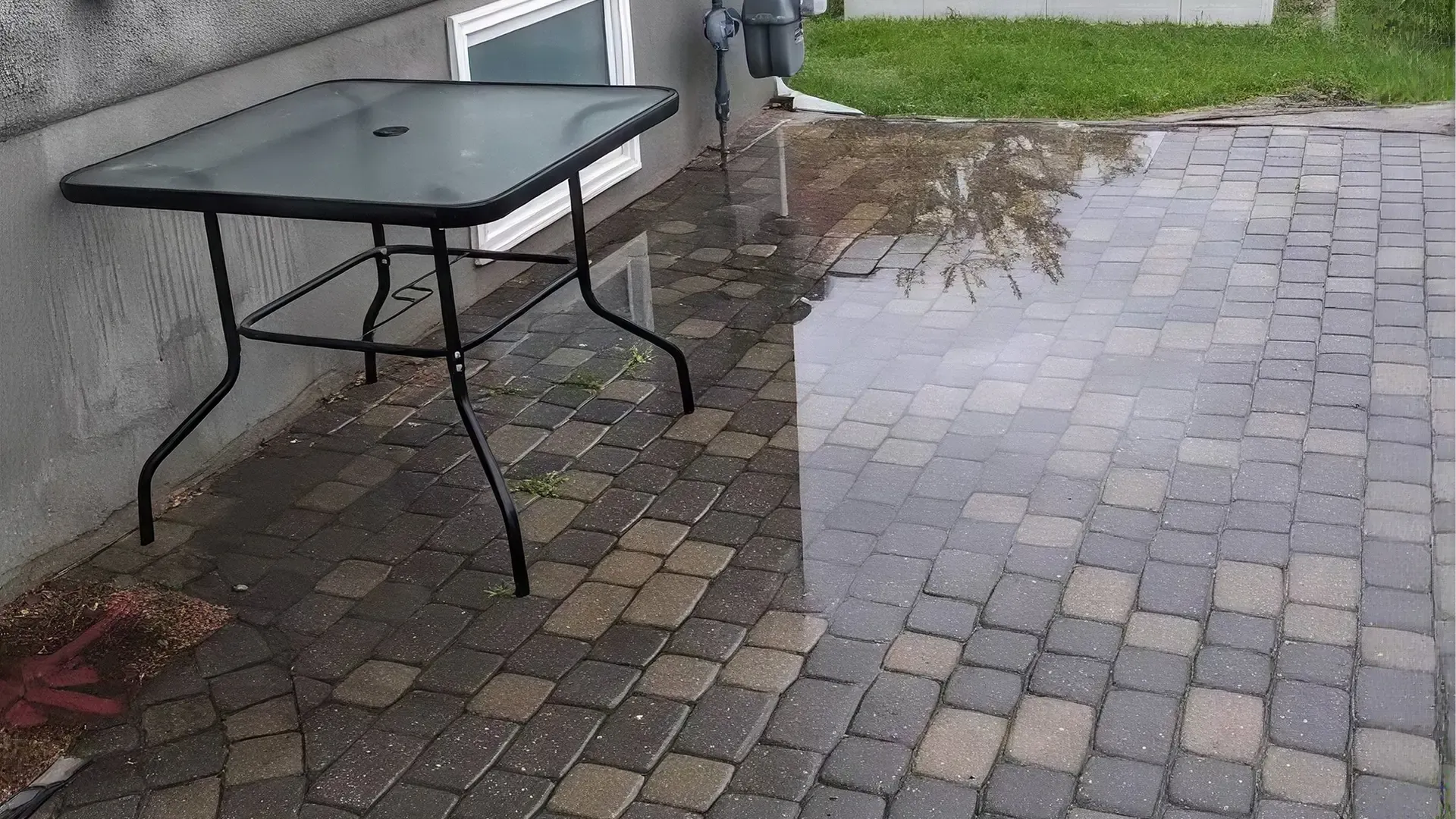
Puddles that stay long after a rainstorm has passed.
Constant moisture can soften the ground until it can no longer support the pavers evenly. That is why drainage and sinking pavers should be considered together. If a repair crew relays the pavers but leaves the water problem in place, the same dip is likely to come back. A proper fix addresses both the surface and the reason it moved. Sunken pavers repair that skips this step rarely solves the problem. Simple changes, such as redirecting a downspout, can make a real difference once the surface is corrected.
How to Fix Sunken Pavers Step by Step
To fix sunken pavers correctly, a crew has to work from the ground up. To fix sunken pavers correctly, never settle for a quick patch. Pressing a dropped paver back into position may look better for a few days, but it does not solve what caused the drop.
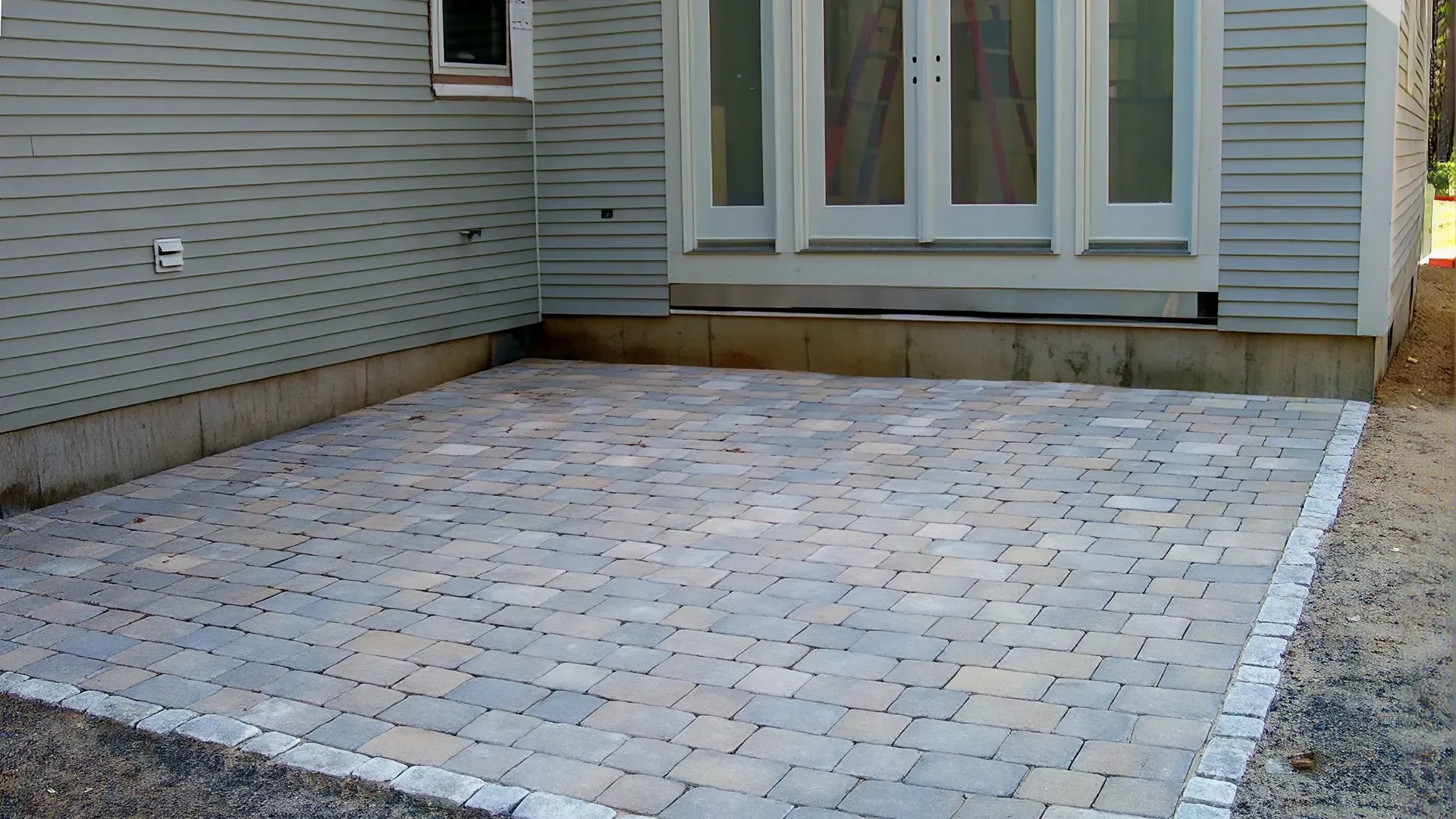
Here is how professionals fix sunken pavers:
-
Document and mark the area. The crew photographs the problem and marks the section that needs work, including pavers just outside the visible dip.
-
Lift the pavers. Affected pavers are carefully removed and set aside in order so the pattern can be rebuilt.
-
Find the cause. The crew inspects the ground for softness, water, roots, or leaks, and plans a correction.
-
Rebuild the surface level. The ground is corrected and prepared so the surface sits firm and even.
-
Relay the pavers. Existing pavers are put back in the original pattern, and any damaged ones are replaced with matching units.
-
Finish and check the slope. The area is cleaned up and checked so water moves away from the house.
When you fix sunken pavers this way, the sunken pavers are rebuilt on corrected ground, so the repaired area blends with the surrounding surface and has a better chance of staying level. No honest contractor can promise a repair will never move again, but correcting the cause is what gives it the best chance.
Professional Sunken Paver Repair vs. DIY
Professional sunken paver repair is the better choice for most homeowners, especially when sunken pavers cover more than a single spot. Pavers are heavy, patterns are unforgiving, and the real issue is usually underneath where you cannot see it.
A homeowner may be comfortable handling a very small, isolated issue. Anything beyond that tends to go wrong for a few reasons. Without finding the cause, the dip often returns. Digging without calling 811 first can damage buried utilities, so always call before any excavation. Matching pattern, spacing, and slope across a large section takes experience. Professional sunken paver repair also includes a diagnosis of why the sunken pavers dropped, which is the part most DIY attempts skip.
If you are unsure whether you need help, read our list of 5 signs you need paver repair. For a sense of how estimates are built, see our guide to paver repair cost in Lakeland. Calling a local crew for professional sunken paver repair early is usually simpler than waiting until a small dip becomes a large one.
Frequently Asked Questions About Sunken Pavers
Why are my pavers sinking?
Pavers sink when the ground beneath them settles, softens, or shifts. Common causes include heavy rain, tree roots, leaks, drainage problems, and heavy vehicle loads.
Can sunken pavers be fixed without replacing them?
Usually, yes. Sunken pavers repair rarely requires new pavers across the whole area. In most cases the existing pavers are lifted, the ground is corrected, and the same pavers are relaid. Only damaged ones need to be replaced.
How long does sunken paver repair take?
A small section can often be done in a day, while larger driveway areas may take several days. Weather can affect scheduling, especially during the summer rainy season.
Will pavers sink again after repair?
No contractor can promise that. When the cause is found and corrected, the chance of the same problem returning is lower.
Conclusion: Get Sunken Pavers Repair in Central Florida
Sunken pavers repair in Central Florida works best when it treats the cause, not just the symptom. Know why pavers sink, look closely at drainage, and choose a crew that lifts, corrects, and relays the surface properly instead of patching it. For help with a dip, a low corner, or a section that keeps moving, an on-site visit is the right place to start.
Call AllBrick Pavers at (407) 818-7876 to request an estimate for sunken pavers repair in Lakeland and across Central Florida. For paving industry resources, visit the Interlocking Concrete Pavement Institute.

About Rael Lara
Rael Lara is the founder of AllBrick Pavers, Central Florida's leading paver contractor, transforming outdoor spaces with precision and lasting quality since 2018.