
Heat Resistant Outdoor Kitchen Pavers for Central Florida Backyards
Which outdoor kitchen pavers survive grill heat, grease and heavy appliances? Compare heat resistant options for Florida. Get a free quote.

Rael Lara

An outdoor kitchen is one of the most rewarding backyard upgrades a Central Florida homeowner can make, and the paver surface underneath it matters just as much as the grill or the countertops. Heat resistant outdoor kitchen pavers need to handle direct grill heat, grease, heavy appliances, and constant foot traffic without cracking, staining, or fading, which rules out a lot of materials that look fine in a showroom but fall apart under real use.
This guide is a deep dive on the cooking zone only: how the appliance you cook on changes what the paver around it has to survive. For the full material-by-material comparison, zone planning, and the sections on BBQ area pavers and outdoor grill pavers, start with our guide to the best outdoor kitchen pavers by material, then come back here to pick the right surface for your grill, smoker, or pizza oven.
What Grill Heat and Grease Do to a Regular Patio Paver
A regular patio mostly needs to handle furniture, foot traffic, and weather. An outdoor kitchen paver patio needs to do all of that while also standing up to direct heat from a grill or smoker, grease and food spills, and the weight of heavy appliances like a built-in refrigerator or a stone countertop.
Outdoor kitchen pavers are chosen specifically for these conditions. Porcelain and concrete pavers used in kitchen areas are manufactured to resist heat and staining better than standard patio materials, and they are set over a base built to carry more weight than a typical seating area. Getting this right from the start matters because an outdoor kitchen is one of the more expensive backyard investments a homeowner makes, and the paver surface underneath it needs to last as long as the appliances built on top of it.
Outdoor Kitchen Layouts and Where the Heat Zone Goes
There is no single layout that works for every yard, which is part of what makes planning an outdoor kitchen paver patio fun. The right shape depends on how much space is available and how the kitchen connects to the rest of the backyard. Whichever layout you choose, the paver closest to the cooking equipment is the one that needs to be heat resistant.
- L-shaped layouts that wrap a grill, counter space, and storage into one compact footprint
- Island-style layouts with cooking and prep space accessible from every side, ideal for larger backyards
- Galley-style layouts that line up appliances along one wall for smaller or narrower spaces
- Compact bbq area pavers setups for homeowners who want a dedicated grill zone without a full kitchen build
Many Central Florida homeowners pair the outdoor kitchen paver patio with an adjoining dining or lounge area using a matching or complementary paver tone, so the whole backyard reads as one connected outdoor living space instead of a kitchen standing alone.
Heat Resistant Outdoor Kitchen Pavers Around the Grill
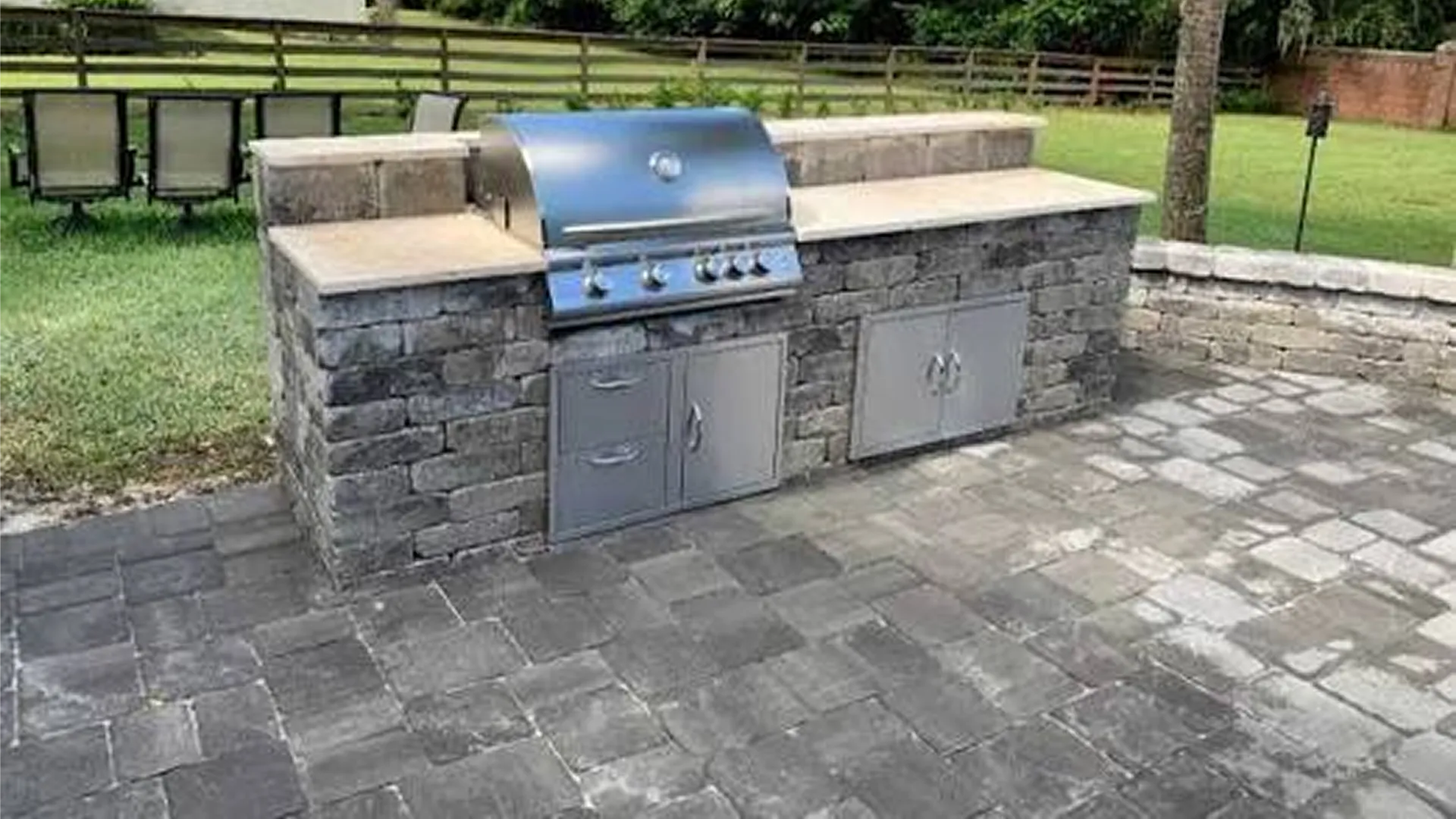
The pavers around the grill sit closest to the heat source and take the most direct exposure to grease and high temperatures, which is why porcelain and select concrete pavers are typically used in that zone even when a different material is chosen for the surrounding patio. These materials are manufactured specifically to resist the heat and staining that a standard patio paver was never designed to handle.
Grill, Smoker, or Pizza Oven: Matching the Paver to the Heat
Not every outdoor cooking appliance stresses a paver the same way, and choosing by appliance is the fastest way to narrow down the right surface.
- Gas grills: the main concern is grease drips and flare-ups in front of the unit, so a low-porosity surface that rinses clean matters more than extreme heat tolerance
- Charcoal grills: ash, embers, and hot spots land on the surface around the unit, so a dense, heat tolerant paver in the zone directly around the grill is the priority
- Smokers: they hold heat for hours and drip residue in the same spot, so plan a durable, easy to degrease surface where the smoker sits
- Pizza ovens and wood-fired units: intense localized heat and falling ash call for the most heat tolerant material in the layout, laid over a base designed for the extra weight
Across all four, the same rule applies: put the most heat and stain resistant paver in the cooking zone, and use a more budget-friendly paver in the dining and lounge areas where heat and grease are less of a concern.
Best Heat Resistant Materials for Outdoor Cooking Area Pavers
Porcelain pavers are increasingly popular for outdoor cooking area pavers because they resist heat, stains, and fading better than most alternatives while requiring very little maintenance, and their very low porosity means grease sits on the surface instead of soaking in. Dense concrete pavers remain a reliable, more budget-friendly option that still holds up well to heat and heavy use when properly installed, though they need a little more attention to grease over time. Natural stone offers a premium, one-of-a-kind look, but it is typically more porous and needs more upkeep, and some types can discolor under prolonged heat, so it is usually better kept out of the zone directly beside the grill.
What a Professional Outdoor Kitchen Pavers Installation Involves
AllBrick Pavers' in-house crew, with no subcontractors, builds every outdoor kitchen paver installation on a base designed to handle the added weight of appliances, countertops, and cabinetry, not just foot traffic. That means a deeper excavation, a more heavily compacted aggregate base, and careful planning around where plumbing, gas lines, and electrical will run before the pavers ever go down.
Because AllBrick Pavers plans and installs each project as one continuous process, from the first design conversation through the final walkthrough, homeowners avoid the coordination headaches that come with hiring separate contractors for the hardscape, the kitchen build, and the utilities.
Cost and Grease Cleanup for Outdoor Kitchen Pavers
Outdoor kitchen pavers typically cost more per square foot than a standard patio because of the added base preparation and the premium materials used in the cooking zone. That cost pays off in maintenance savings over time, since a properly installed paver surface resists the heat and stains that would quickly damage a lower-grade material. Routine care is simple: sweeping regularly, an occasional rinse to remove grease near the grill, and checking joint sand periodically to keep pavers locked tightly in place.
Design Trends for Outdoor Kitchen Pavers This Season
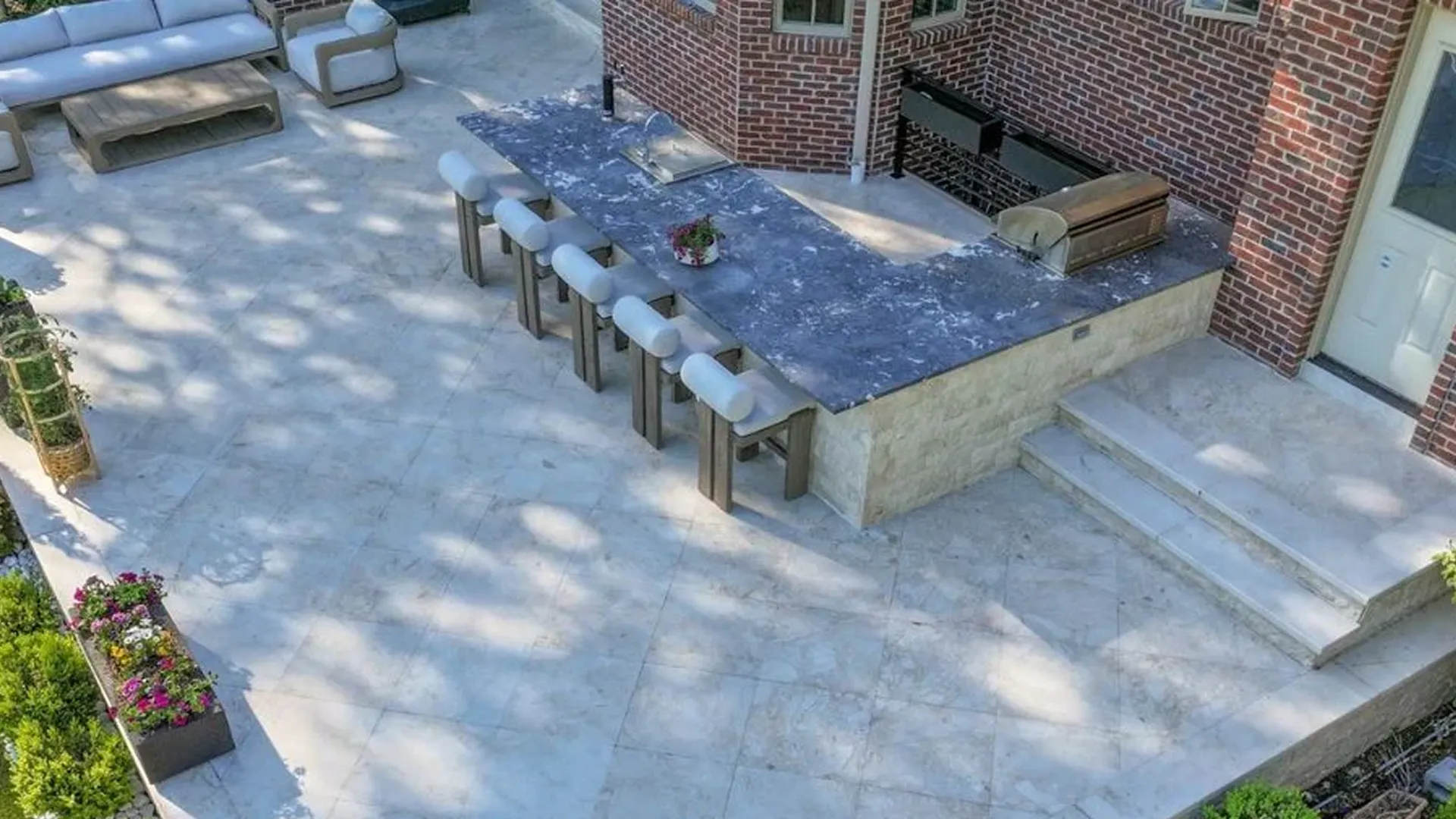
The most photographed outdoor kitchens right now lean into contrast: a light or neutral field paver paired with a darker charcoal or graphite border around the cooking zone, which visually separates the kitchen from the rest of the patio without needing a wall or railing. Large-format porcelain pavers in stone-look finishes are also trending for outdoor kitchen paver patio designs, giving the space a clean, modern look that photographs well for anyone planning to show it off on Pinterest or Instagram.
Texture matters too. A slightly textured, matte-finish paver hides water spots and smudges better than a high-gloss finish, which keeps the space looking clean between cleanings, an especially useful detail for a zone that sees daily grease and food prep.
Related Outdoor Kitchen Reading
Planning the whole space? See how to connect an outdoor kitchen to your lanai and pool deck and what outdoor kitchen pavers look like in Polk County.
Areas We Serve for Outdoor Kitchen Pavers
AllBrick Pavers designs and installs outdoor kitchen pavers throughout Central Florida, including Lakeland, Winter Haven, Davenport, Haines City, Auburndale, and Horizon West. Every outdoor kitchen project is completed by the same in-house crew, using premium materials, and is backed by AllBrick Pavers' 5-Year Workmanship Warranty.
Frequently Asked Questions About Outdoor Kitchen Pavers
Which pavers handle heat from a charcoal grill, smoker, or pizza oven?
Porcelain and dense concrete pavers are the usual choices for the zone around high-heat appliances, because both are manufactured to resist heat and staining. Porcelain is the lowest maintenance option, while dense concrete is more budget-friendly, and both should sit over a base built for the appliance weight.
Can outdoor kitchen pavers handle a heavy grill or built-in appliances?
Yes, when installed on a properly compacted base designed for the added weight. AllBrick Pavers builds a deeper, more heavily compacted base under outdoor kitchen areas specifically to support appliances, countertops, and cabinetry without shifting over time.
How long does an outdoor kitchen pavers installation take?
Timelines vary based on the size of the kitchen and whether plumbing, gas, or electrical work is involved, but most Central Florida outdoor kitchen paver projects are completed within one to two weeks from base preparation through final finishing.
Do outdoor kitchen pavers stain from grease and food spills?
Properly selected materials like porcelain and quality concrete pavers resist staining far better than standard patio surfaces, and most spills clean up with a simple rinse or light scrubbing rather than leaving a permanent mark.
Start Planning Your Outdoor Kitchen
The right outdoor kitchen pavers turn a grill and a countertop into a real outdoor living space built to last. See AllBrick Pavers' patio paver services, get inspired by the project gallery, or read more outdoor living ideas for Central Florida backyards.
Ready to design your outdoor kitchen? Request your free consultation or call AllBrick Pavers at +1 407-818-7876.

About Rael Lara
Rael Lara is the founder of AllBrick Pavers, Central Florida's leading paver contractor, transforming outdoor spaces with precision and lasting quality since 2018.