
Outdoor Kitchen Pavers: Guide to the Best Materials
Discover which outdoor kitchen pavers last longest, handle heat best, and look stunning. Expert guide by AllBrick Pavers. Get a free quote!

Rael Lara

Planning an outdoor kitchen means making dozens of decisions, and choosing the right pavers may be the most important one. The wrong material cracks in the heat, becomes dangerously slippery when wet, or simply looks out of place in your backyard within just a few years.
The right outdoor kitchen pavers, on the other hand, protect your investment, add value to your entire outdoor space, and stand up to years of cooking use, weather exposure, and foot traffic. In this guide, AllBrick Pavers walks through all the top paver options, what makes each one suitable (or not) for kitchen areas, and exactly what you should look for before you buy.
Whether you're designing a full outdoor kitchen paver patio, a compact BBQ station, or a summer kitchen with a complete appliance setup, this guide has everything you need to make the right call.
How to Design an Outdoor Kitchen Paver Patio That Actually Works
The foundation of any great outdoor kitchen starts beneath your feet. An outdoor kitchen paver patio isn't just about looks, it needs to support the weight of heavy appliances, hold up against grease and food splatter, and stay cool enough underfoot even in high temperatures.
When designing your outdoor kitchen paver patio, the most critical factor is load-bearing capacity. Standard residential pavers are rated for foot traffic, but a built-in grill island, countertop, and refrigerator can add hundreds of pounds concentrated in one area. You'll need pavers with the right thickness for those zones.
Another key consideration is the laying pattern. Herringbone and running bond patterns distribute weight more evenly than a simple grid, which reduces cracking over time, especially important in areas where the ground shifts seasonally. An outdoor kitchen patio designed with proper edge restraints and a compacted gravel base will last 20+ years with minimal maintenance.
Drainage is non-negotiable. A patio that pools water near your outdoor kitchen becomes a slip hazard and accelerates paver deterioration. A professional installation with a 1–2% slope away from the kitchen area solves this problem entirely.
The Best Pavers for Outdoor Kitchens by Material Type
Choosing the right outdoor kitchen pavers comes down to four factors: heat resistance, slip resistance, stain resistance, and aesthetics. Here's how the most popular materials compare:
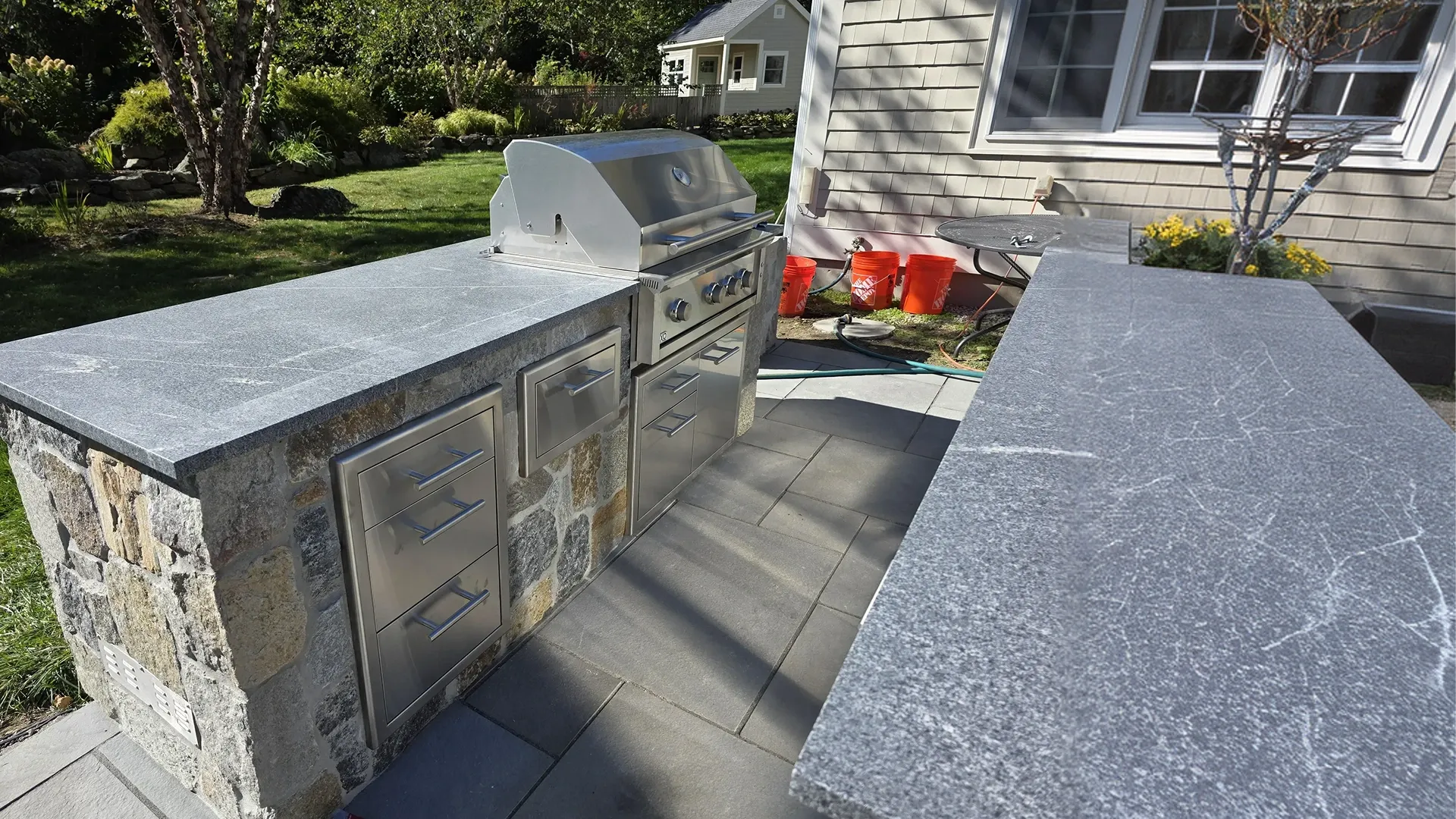
Concrete Pavers
Concrete pavers are the most widely used material for outdoor kitchens in the United States, offering unmatched durability at a competitive price point. They're available in dozens of colors and textures, and individual pieces can be replaced if they crack or stain, a major advantage over poured concrete slabs.
Specifically for kitchen areas, look for concrete pavers with a brushed or tumbled finish. Smooth surfaces become slippery when grease hits them. Textured finishes maintain grip even when wet.
Porcelain Tile Pavers
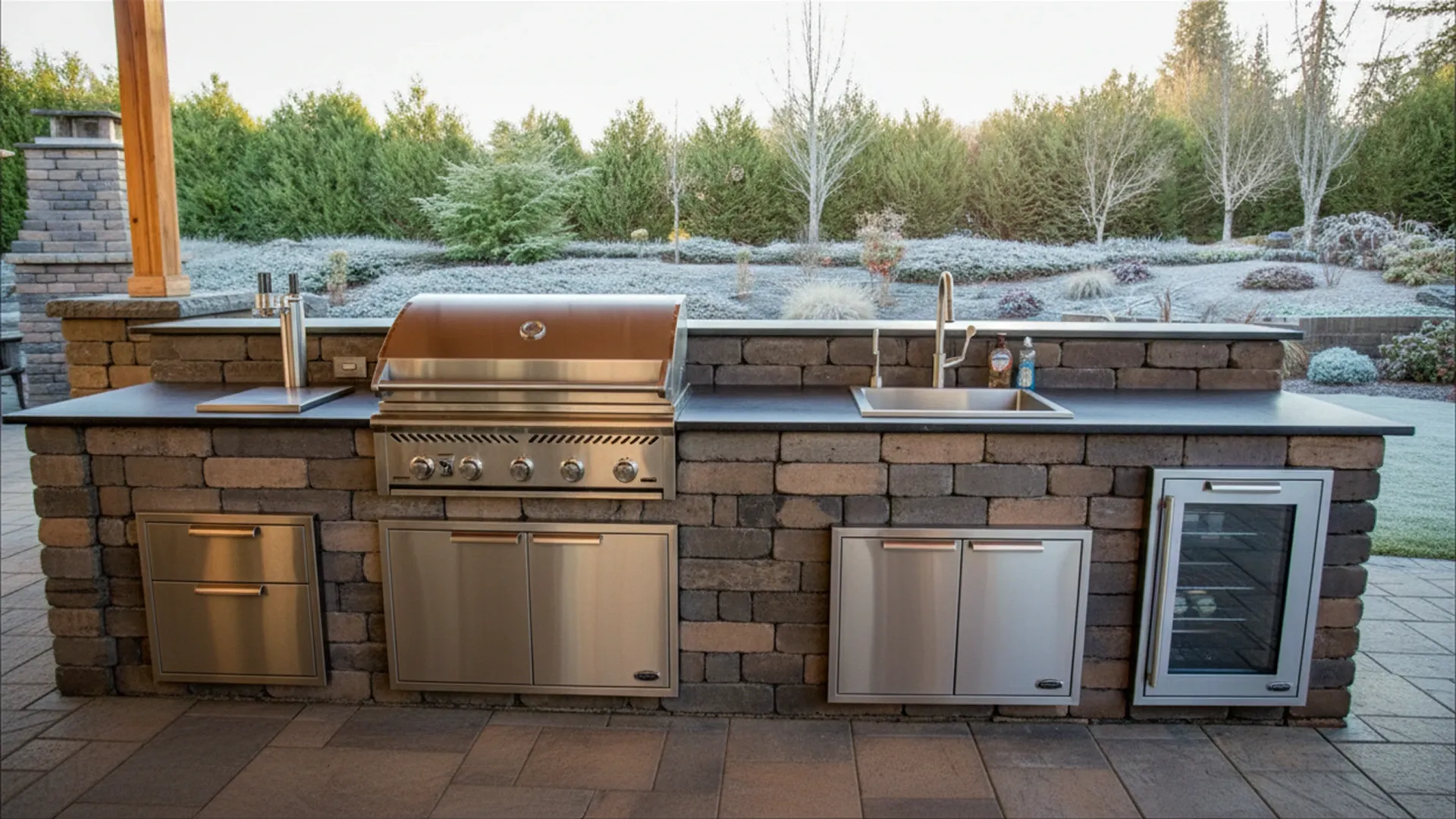
Porcelain has become a top outdoor kitchen flooring option among homeowners looking for a high-end finish. With near-zero porosity, porcelain repels grease, wine, and sauces with ease. It's also UV-stable, meaning colors don't fade, a key consideration for outdoor kitchens exposed to direct sun.
The downside: porcelain is harder to cut and more expensive to install than concrete. On large, complex projects with curves or cutouts around built-in appliances, labor costs go up.
Natural Stone (Bluestone, Travertine, Slate)
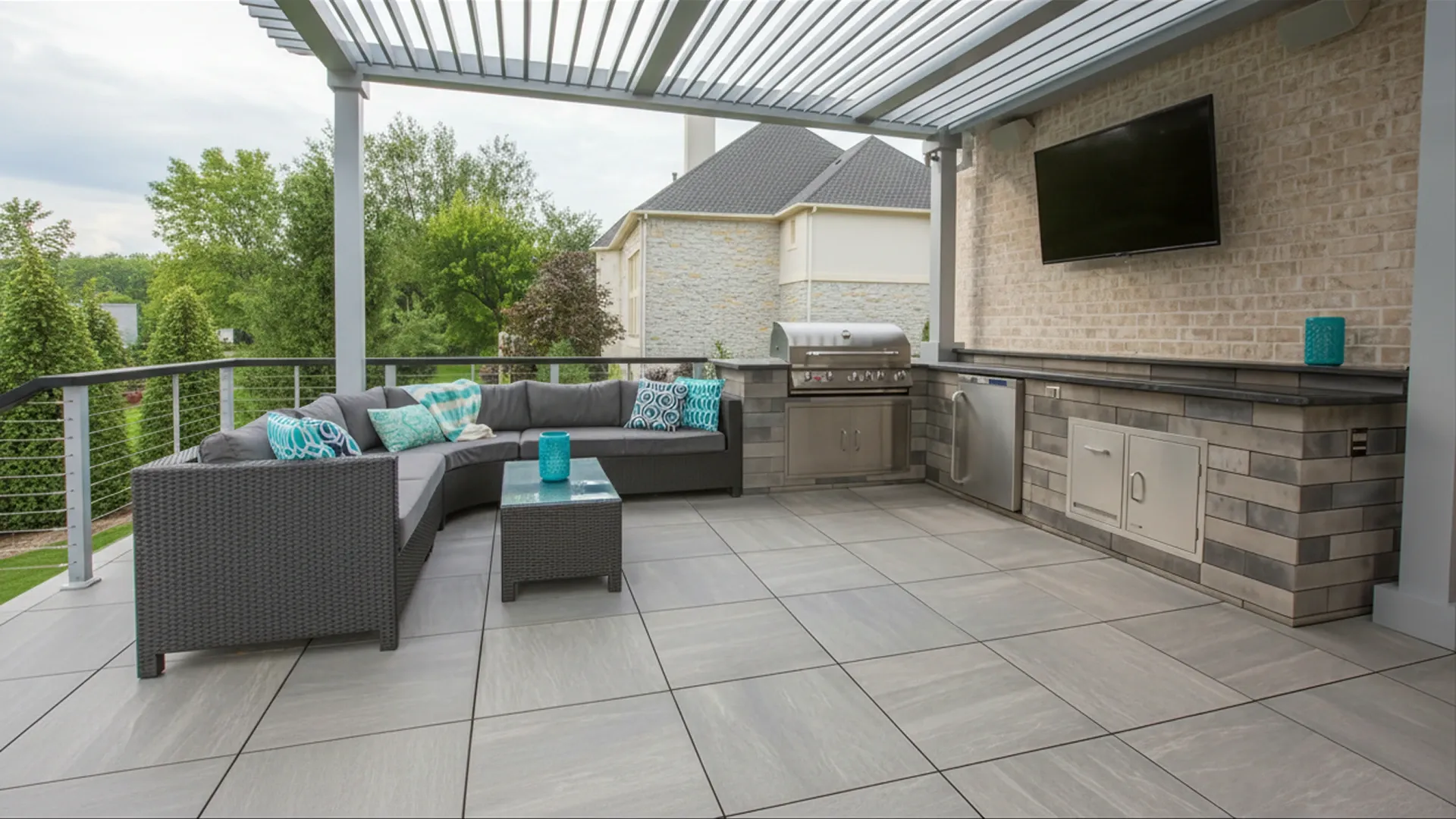
Natural stone offers unmatched visual character, and certain types, especially travertine, stay naturally cooler to the touch than concrete or porcelain. However, most natural stone is porous and requires regular cleaning to prevent oil and food stains from soaking in.
Travertine is a popular outdoor kitchen paver choice in warmer climates specifically because it stays cooler underfoot than dark-colored concrete or brick.
Brick Pavers
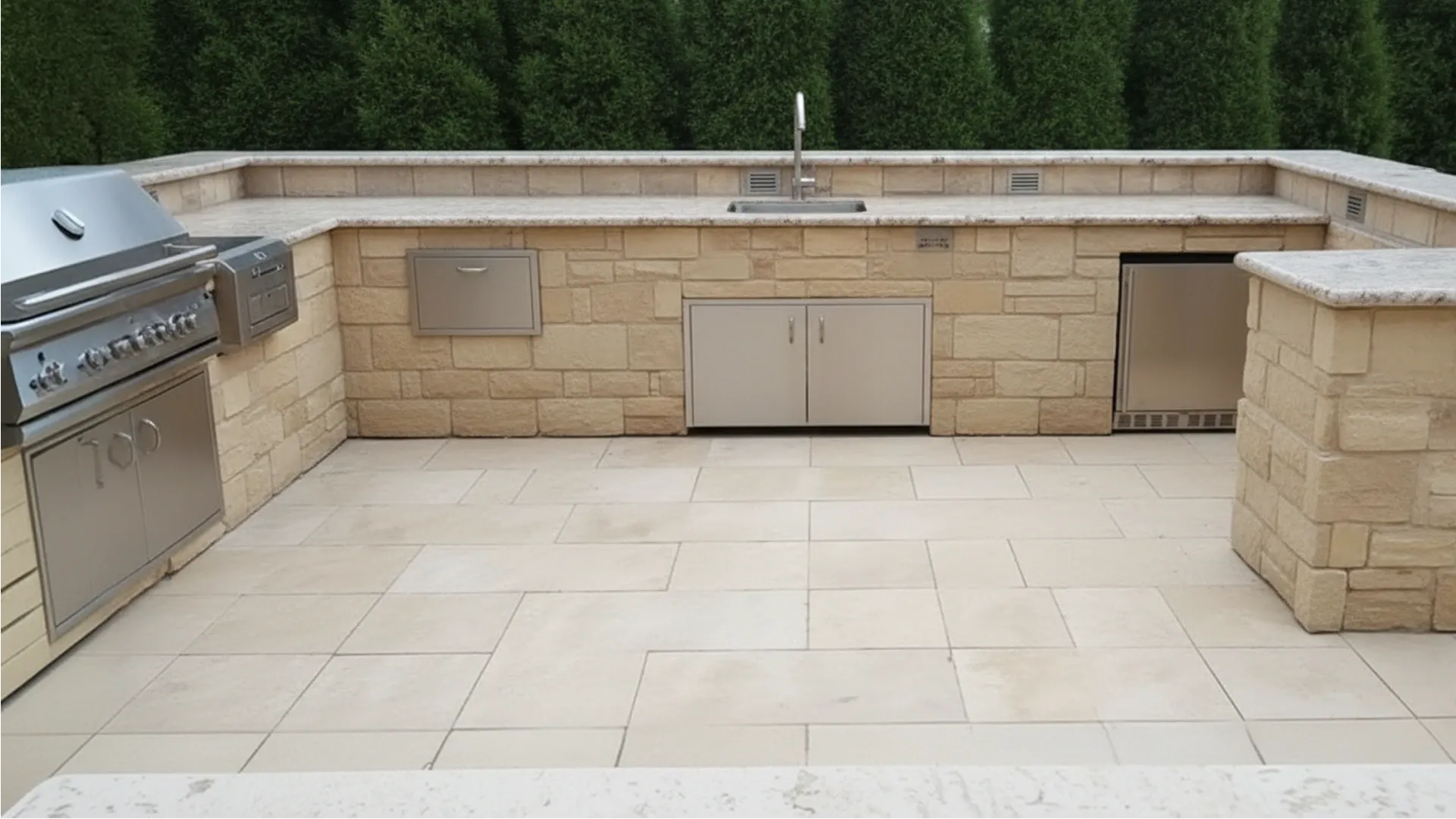
Traditional clay brick pavers bring warmth and timeless charm to outdoor kitchen spaces. They're extremely durable (clay brick can last 100+ years), have a natural texture that prevents slipping, and age beautifully. For homeowners looking to match an existing home exterior, brick pavers create a cohesive, classic look.
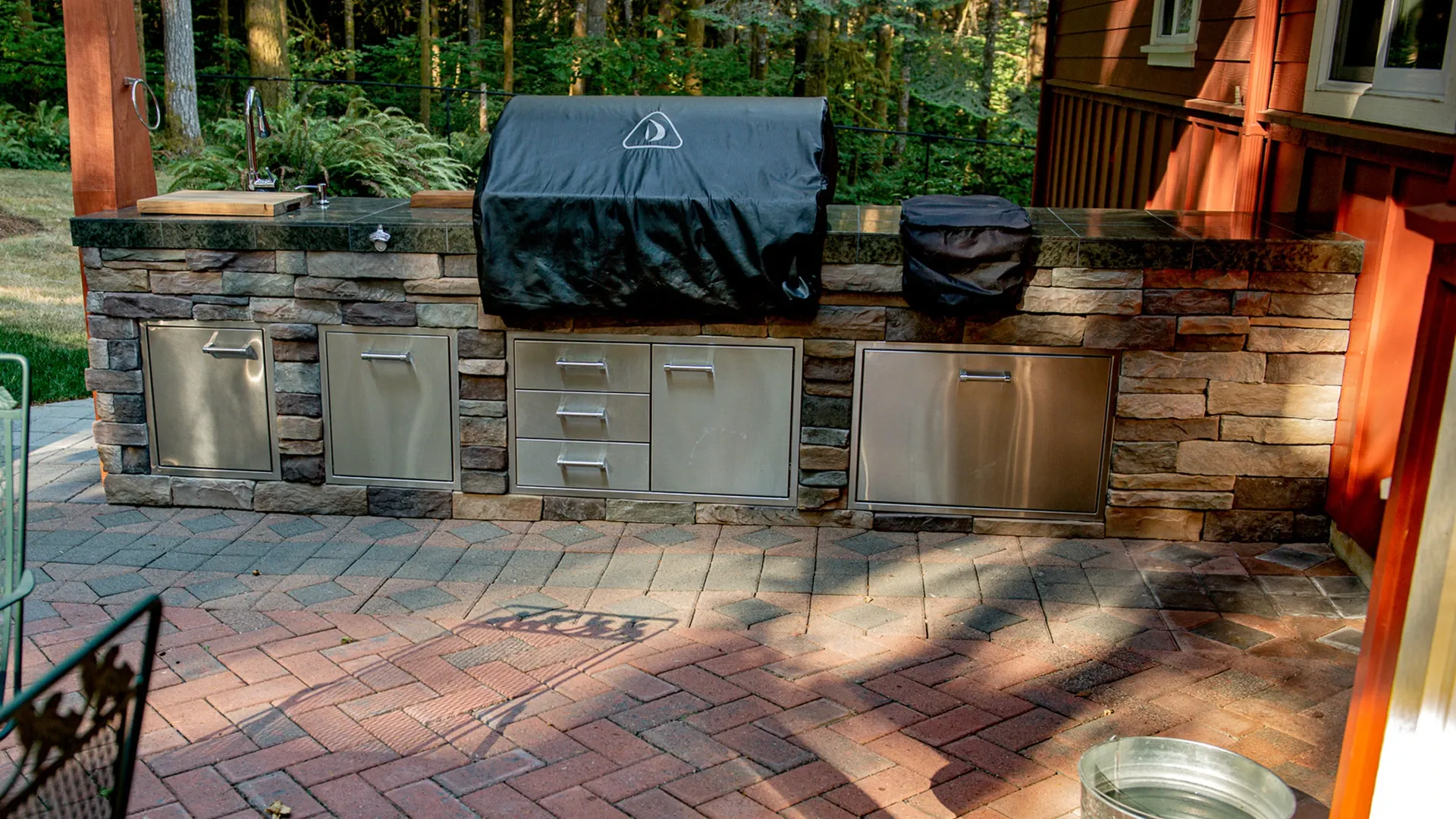
How to Lay Out Your Outdoor Kitchen Pavers
A well-defined outdoor kitchen paver layout serves two purposes: it creates a clear visual zone that defines the kitchen within your backyard, and it provides a functional surface that meets the specific needs of each prep area.
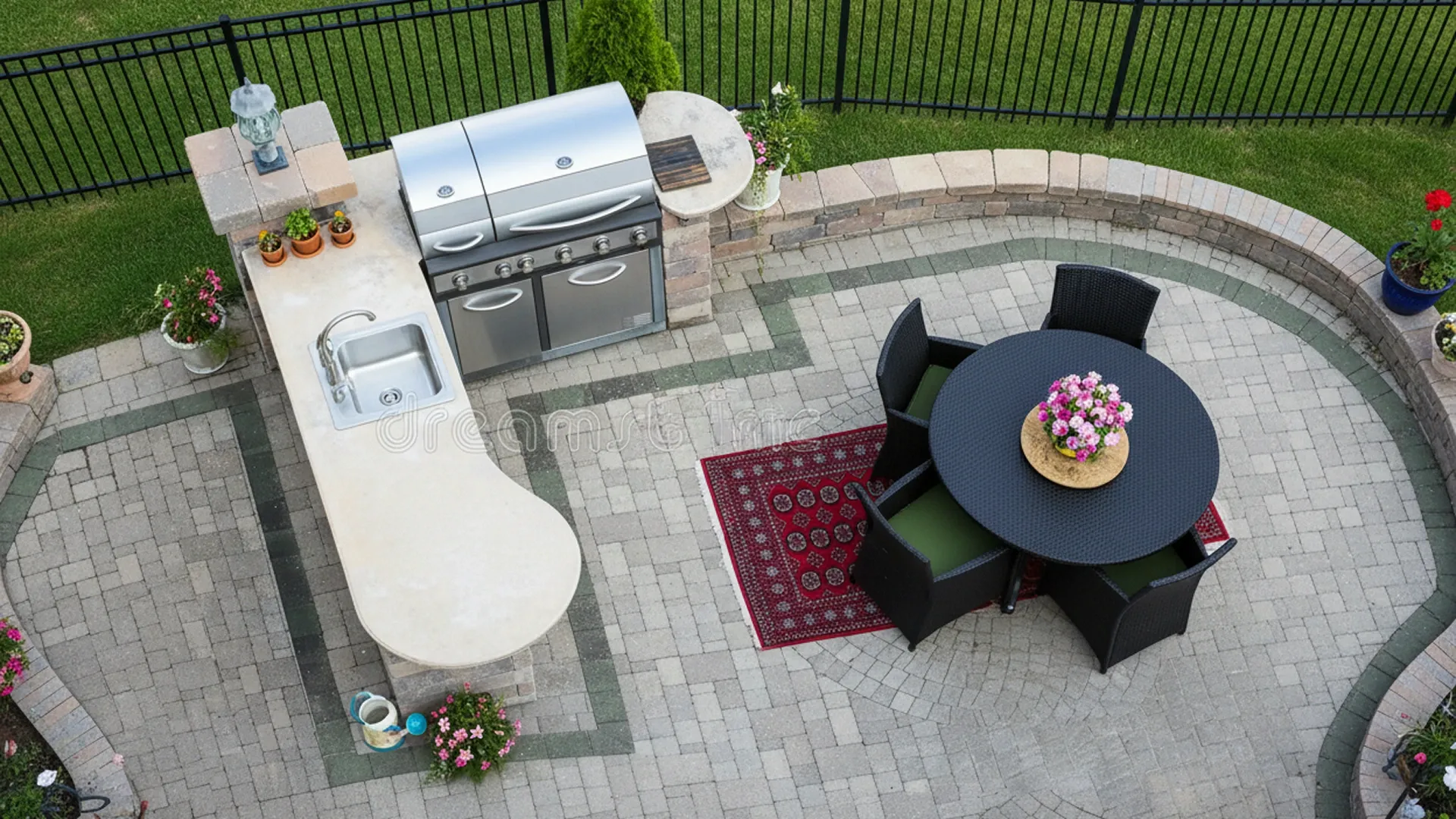
Most outdoor kitchen paver layouts follow a zone-based approach:
Zone 1 — The Cooking Core: The area immediately surrounding the grill, smoker, or pizza oven. This zone needs the most heat-resistant, easiest-to-clean paver. Porcelain or dense concrete pavers are ideal here.
Zone 2 — The Prep and Serving Counter: Adjacent to the cooking core, this area sees more foot traffic and food prep mess. Textured concrete pavers work well here, especially if they match the cooking zone for a cohesive look.
Zone 3 — The Dining and Transition Area: Where guests sit, circulate, and gather. This zone can use any paver that complements the kitchen area. There's more flexibility here since heat and grease are less of a concern.
Mixing two complementary paver styles between zones, such as porcelain in the core kitchen area and brick in the dining area, creates visual interest while keeping the overall outdoor kitchen paver design unified. Using a contrasting border paver between zones makes the layout feel intentional rather than accidental.
BBQ Area Pavers: What to Consider Around the Grill
The surface around the grill takes more wear than any other part of your outdoor kitchen. BBQ area pavers need to handle radiant heat from the grill body, grease splatter, and frequent cleanings with degreasers.
Here's what matters most when selecting BBQ area pavers:
Heat Resistance: Most pavers handle ambient outdoor heat without issue, but areas directly adjacent to a grill can reach surface temperatures of 150°F or higher during extended cooking sessions. Concrete and porcelain pavers handle this well. Some natural stone types, particularly limestone and certain marbles, can discolor under prolonged heat exposure.
Grease Resistance: This is where material porosity becomes critical. BBQ area pavers with high porosity (natural stone, brick) will absorb grease over time, creating dark stains that are nearly impossible to remove. Porcelain is your best option for zero grease absorption. Dense concrete comes in second.
Color Considerations: Dark-colored BBQ area pavers show less grease staining than lighter colors, but they absorb significantly more heat, which is uncomfortable if you're standing in the cooking zone for long periods. Medium gray tones and warm beiges offer the best balance.
Cleaning Durability: The best BBQ area pavers can be cleaned with commercial degreasers without damaging the surface. Avoid highly polished natural stones in the grill zone, acidic cleaners etch the finish over time.
Outdoor Grill Pavers: Size, Spacing, and Safety Requirements
Outdoor grill pavers have one requirement above all others: safety. The National Fire Protection Association (NFPA) recommends maintaining a minimum clearance of 10 feet between any open-flame grill and combustible surfaces. Your paver layout should reflect this, not just in material choice, but in the size and shape of the surface area.
One frequently overlooked consideration: if your outdoor grill pavers are directly beneath a pergola, overhead structure, or tree canopy, ventilation matters. Dense overhead coverage near open flames is a regulatory concern in many municipalities, always check local fire codes during the planning phase.
Summer Kitchen Pavers: Designing for Full Outdoor Living
A summer kitchen, a fully equipped outdoor cooking space with a sink, refrigerator, cabinetry, and multiple appliances, requires a paver type that matches the scale and durability of the installation.
Unlike a simple BBQ area, summer kitchen pavers need to cover a larger footprint, accommodate multiple utility lines running beneath the surface, and complement a more significant architectural investment.
Key considerations for summer kitchen pavers:
Utility Access: Running water, gas, and electrical lines typically run beneath the paver surface to supply a summer kitchen. This means the base installation must include conduit and cleanout access, and the paver layout must allow future access if lines need maintenance.
Consistency Across a Large Area: Large summer kitchen paver installations benefit from a single material applied consistently across all zones. Varying patterns within a large area can visually fragment the space. Reserve material contrast for borders and transitions.
Covered vs. Uncovered Areas: Many summer kitchens include partial overhead coverage above the prep area. Pavers in covered zones don't experience UV fading — which matters when matching covered and uncovered sections. Choose a UV-stable material (porcelain or concrete with UV-resistant color treatment) to ensure consistency over time.
For homeowners in Central Florida, summer kitchen pavers need to handle humidity and brief but intense rainstorms. Concrete pavers rated for Florida's climate zone offer the best long-term performance here.
Outdoor Kitchen Area Pavers: Maintenance Guide
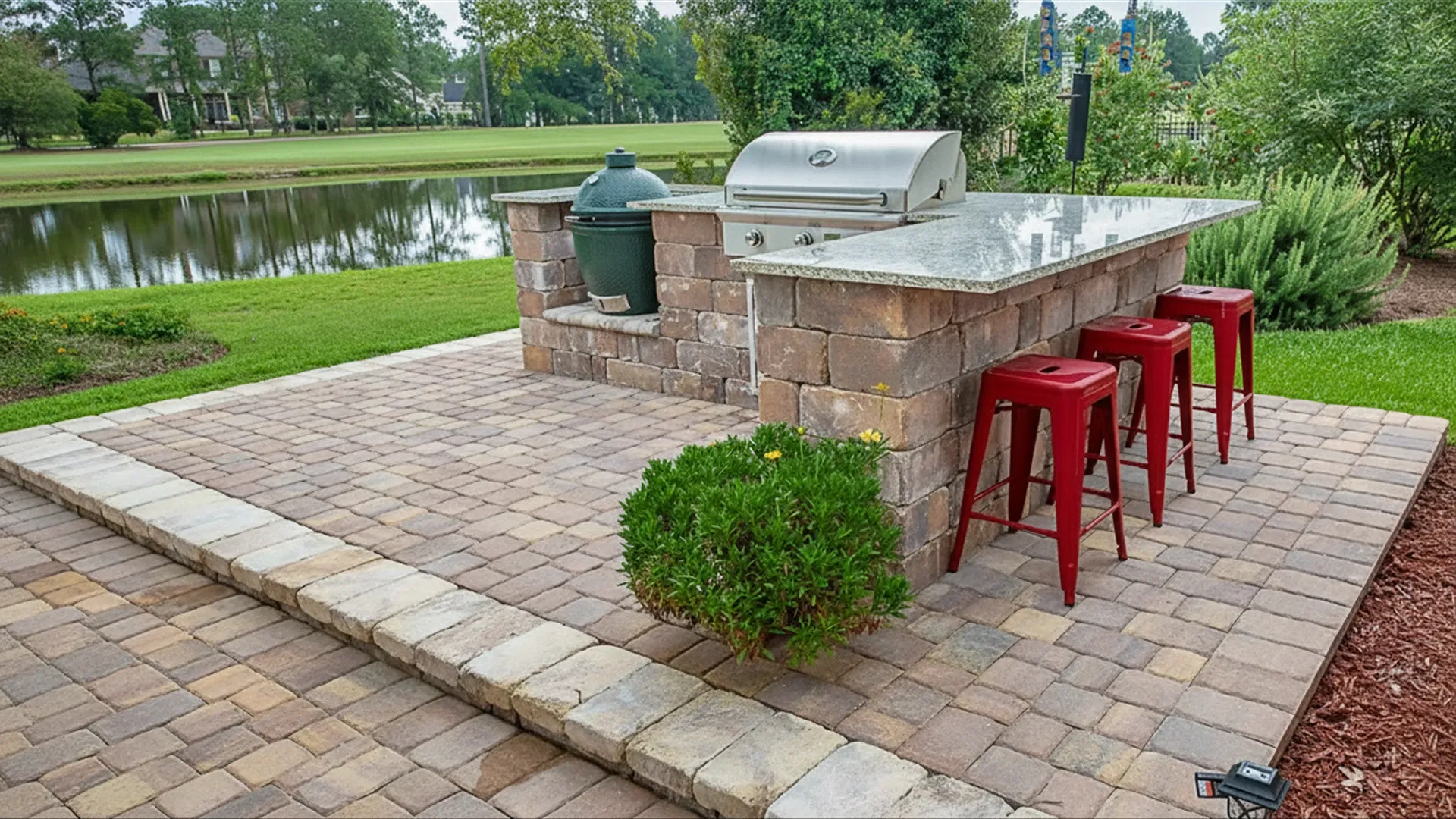
Even the best outdoor kitchen area pavers require regular upkeep to stay clean, safe, and looking great. Here's a simple maintenance schedule that works for any material:
Weekly (during outdoor cooking season):
- Sweep away food scraps, ash, and loose debris
- Clean grease spots with a degreaser appropriate for your paver material
- Check for erosion in polymeric sand joints, especially after rain
Monthly:
- Rinse the entire outdoor kitchen area paver surface with a garden hose or low-pressure washer (high pressure can erode joint sand and damage some stone surfaces)
- Inspect for cracked or loose pavers that could create a tripping hazard
Annually:
- Clean natural stone or brick pavers promptly after spills
- Check and refill any worn joint sand
- Inspect the base around heavy appliance areas for any settling
Frequently Asked Questions
What type of pavers are best for an outdoor kitchen? Porcelain and concrete pavers are the top choices for outdoor kitchens. Porcelain has near-zero porosity and is UV-stable, so colors stay consistent for years. Concrete offers more design flexibility (shapes, colors, textures) while providing good stain resistance with routine cleaning.
How thick should pavers be for an outdoor kitchen? For general foot traffic areas, standard-thickness pavers are sufficient. For zones directly beneath heavy appliances, such as built-in grills, outdoor refrigerators, or islands with stone countertops, use thicker pavers or place a reinforced concrete base beneath the paver surface. Thicker pavers reduce the risk of cracking under point loads.
How much do outdoor kitchen pavers cost? Outdoor kitchen paver costs vary depending on material and project complexity. Concrete pavers fall in the most affordable range, while porcelain comes in at a mid-range price point. Natural stone can run higher depending on the type and sourcing. Request a detailed quote from AllBrick Pavers. Improper base installation is the leading cause of paver failure.
Cooking with charcoal, a smoker, or a pizza oven? See which heat resistant outdoor kitchen pavers fit each appliance.
Conclusion
Choosing the right outdoor kitchen pavers comes down to matching material properties to how you cook and how you live. Porcelain delivers the ultimate in stain and heat resistance. Concrete pavers offer flexibility, durability, and a wide range of design options. Brick brings timeless character that ages beautifully. Natural stone creates unmatched visual impact when properly maintained.
Whatever material you choose, the core principles remain the same: proper base installation, correct slope for drainage, heat-appropriate material selection for the grill area, and a maintenance routine that keeps your outdoor kitchen area pavers performing for decades.
AllBrick Pavers specializes in outdoor kitchen paver design and installation. Contact us today for a free consultation and quote, and let's build an outdoor kitchen that works as hard as you do.

About Rael Lara
Rael Lara is the founder of AllBrick Pavers, Central Florida's leading paver contractor, transforming outdoor spaces with precision and lasting quality since 2018.