
Remove Oil Stains From Pavers, Plus Rust and Tire Marks
Learn how to remove oil stains from pavers, plus rust and tire marks, with gentle steps for your driveway. Call AllBrick Pavers at +1 407-818-7876.

Rael Lara

To remove oil stains from pavers, work on the spot while it is fresh: blot the oil, cover it with an absorbent such as baking soda or cornstarch, let it sit, then scrub with warm water and mild dish soap and rinse. Rust and tire marks need slightly different gentle steps. This guide shows how to remove oil stains from pavers first, then rust and tire marks.
If you are still planning the whole entrance, start with our overview of driveway pavers in Central Florida. This post goes deeper on the marks that show up once the driveway is in daily use.
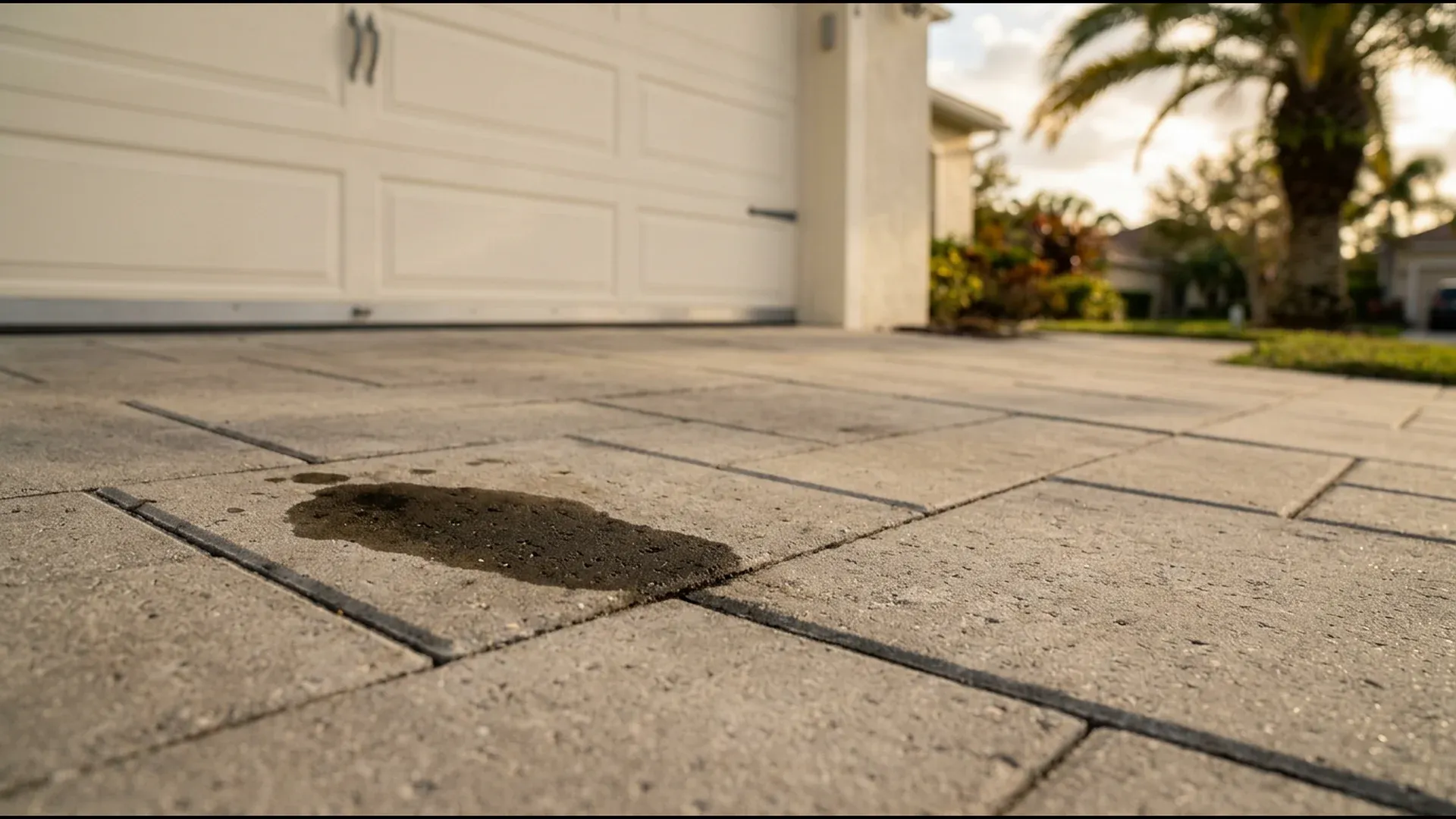
Why Do Oil, Rust and Tire Marks Stand Out on Pavers?
Oil, rust and tire marks stand out because pavers are naturally porous and often light in color, so a spill or a streak shows up clearly and can settle into the surface. The good news is that pavers are individual units, so you can focus your cleaning exactly where the mark is.
An oil stain on a paver driveway is the most common of the three, and each mark has a usual source:
- Oil: drips from a vehicle where you park, or grease splashed near a grill.
- Rust: a metal chair or planter left out in the rain, or sprinkler water that carries iron.
- Tire marks: dark rubber streaks where tires turn or stop, often at the same spot by the garage.
Fresh marks lift far more easily than ones left to set in for weeks, so the first move is always to deal with it early. Our guide to cleaning pavers in Auburndale covers the everyday routine.
How Do You Remove Oil Stains From Pavers?
To remove oil stains from pavers, blot first, draw the oil out with an absorbent, then wash the spot gently. Wiping spreads a fresh drip, so patience at the start helps. These steps suit most driveway spots:
- Press a paper towel onto a fresh drip to lift what it can. Rubbing only pushes the oil outward.
- Bury the stain under baking soda or cornstarch, which draw the oil up and out.
- Give it a few hours, or a full night for a stubborn mark, and then brush the powder off.
- Work in warm water mixed with a gentle dish soap, scrubbing small circles with a stiff brush.
- Hose the area clean and let the sun dry it.
On older grease, a degreaser made for pavers can help; follow its label. No method promises that a mark will disappear, so repeat gently instead of scrubbing hard.
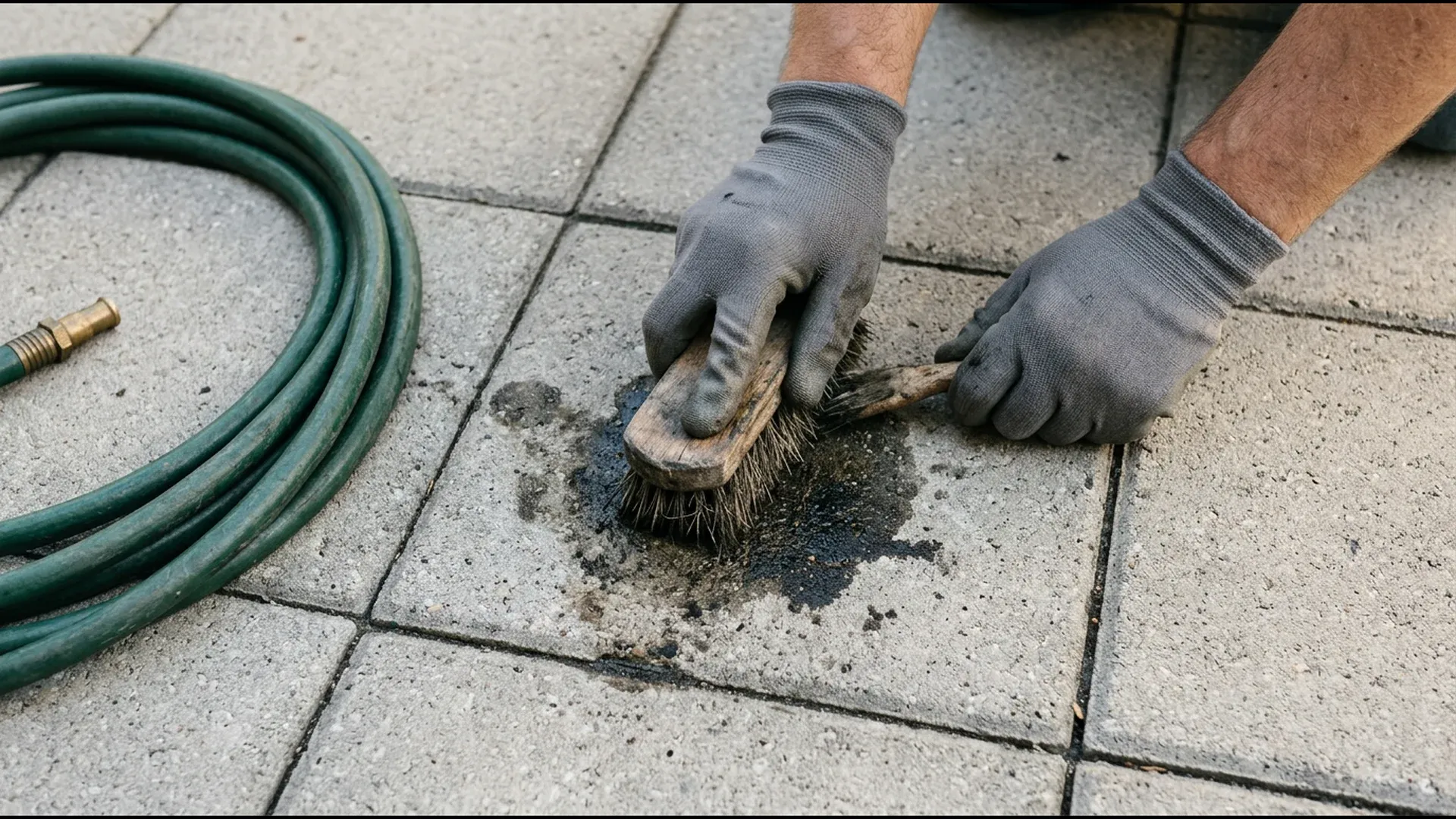
How Do You Remove Rust Stains From Pavers?
To remove rust stains from pavers, rinse the area, apply a rust remover made for pavers, let it work for the time on the label, scrub gently and rinse again. Rust leaves an orange or reddish tint that is easy to see on a lighter driveway or walkway.
Follow this order:
- Hose off loose dirt first, so you can see exactly where the rust sits.
- Put a rust remover made for pavers on the mark; hardware stores carry them, and many contain oxalic acid, so read the label first.
- Wait as long as the label says, then brush gently in small circles.
- Rinse well and let the surface dry.
Patience beats force, because gentle repeated treatment keeps the surface looking even. Then find the source. A sprinkler head that sprays onto the driveway is a common reason rust keeps coming back, so check heads near pavers once or twice a year.
What Can You Do About Tire Marks on Pavers?
Tire marks on pavers are dark rubber streaks, and the gentlest first step is the same routine you would use for dirt: water, mild soap and a stiff brush. No home method is certain to lift every streak.
Try this:
- Wet the streak with a hose.
- Brush it with warm, mildly soapy water in small circles.
- Rinse, let it dry and check the result in daylight before you decide to go again.
If the streak is still there after a second gentle pass, stop and ask a crew to look at it. Harsh scrubbing can change how one patch of the driveway looks next to the rest, which is harder to fix than the mark itself.
How Do You Keep Pavers Looking New After a Stain?
You keep pavers looking new with a light, steady routine instead of waiting for a mark to appear. It also makes it easier to remove oil stains from pavers before they set. A simple rhythm looks like this:
- A quick hose rinse every couple of weeks, so dust and pollen do not settle in.
- A fuller scrub with a cleaner made for pavers every few months, beginning where cars and people pass most, such as the driveway entrance.
- Prompt attention to any oil, rust or rubber streak, because fresh marks lift more easily.
- A look at the spot where you park, so a new drip gets blotted before it sets.
Color also plays a part. Our guide to paver colors for Florida driveways notes that mid-tone colors tend to handle rust and oil more gracefully, and AllBrick Pavers can talk through the right cleaning approach for your material and color.
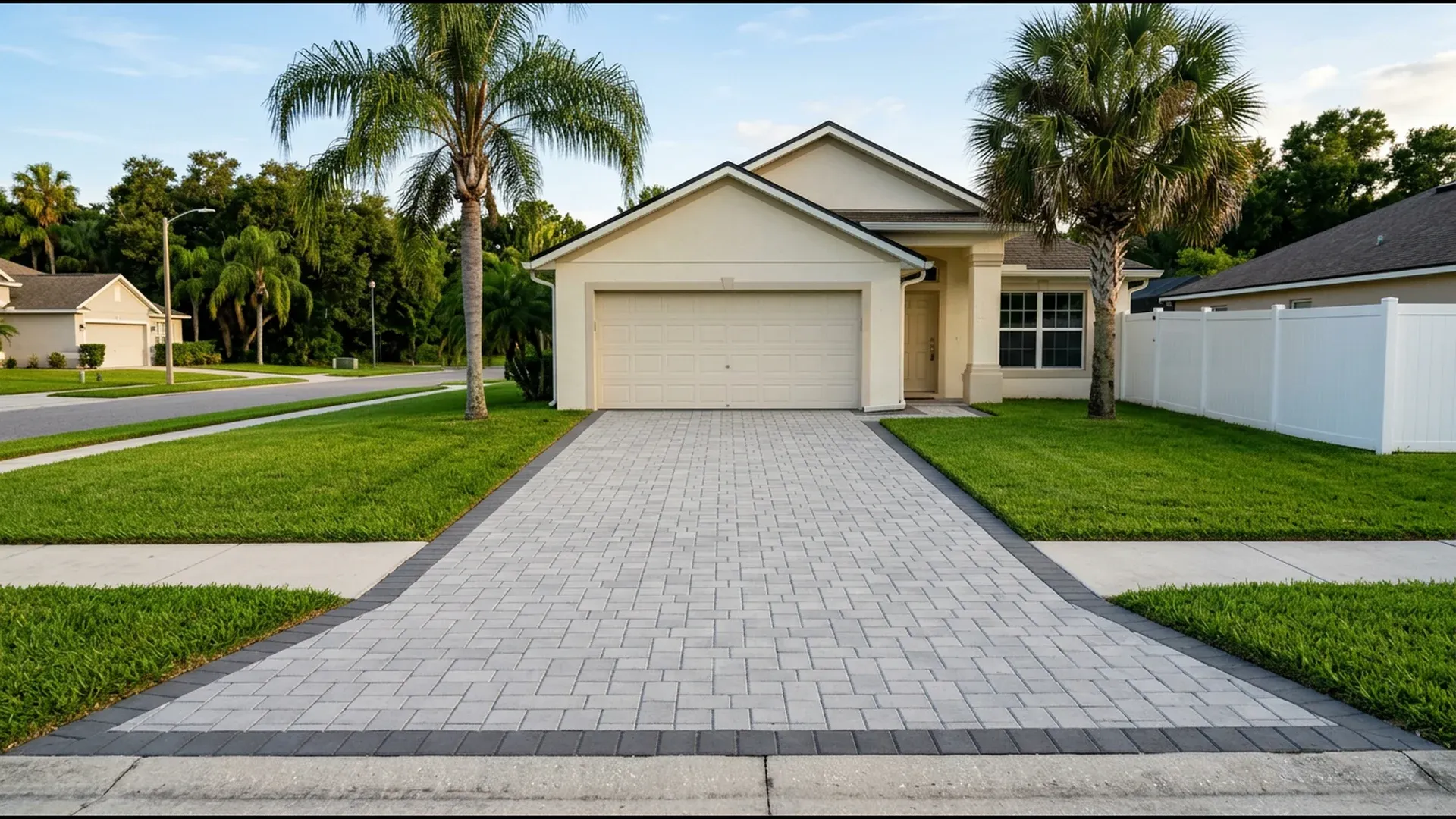
When Is a Stain More Than a Surface Clean?
A stain is more than a surface clean when it will not lift after careful, repeated treatment, or when you also see pavers shifting or sinking, or gaps forming in the joints. Those signs point to something beyond cleaning, and the question is whether the problem is cosmetic or deeper.
A crew can work on pavers one unit at a time, so a problem area does not mean starting the driveway over. Our guide to paver repair in Central Florida explains what a visit involves. If you are choosing a new driveway pattern, the driveway paver patterns guide shows the layouts side by side.
Take photos of the mark in daylight, note what caused it and when it appeared, and share them when you call. That lets the crew tell you quickly whether another home clean is likely to help.
Remove Oil Stains From Pavers FAQ
Can I remove oil stains from pavers myself?
In many cases, yes. Fresh oil often responds to blotting, an absorbent such as baking soda, and a scrub with warm water and mild dish soap. Older grease may need a degreaser made for pavers. Results vary, so repeat gently, and call a crew if the mark stays.
What is the best way to get rust off pavers?
Rinse the area, apply a rust remover made for pavers, leave it for the time on the label, scrub gently in small circles and rinse. Many of these products use oxalic acid, so read the label first. Also check nearby sprinkler heads, which are a common source of rust.
Will an oil stain come out of pavers completely?
Not always, and nobody can promise it. Fresh stains lift far more easily than ones left for weeks, and repeating a gentle treatment works better than scrubbing hard. If a mark remains after a couple of careful tries, ask AllBrick Pavers to look at it during a free consultation.
How do I clean tire marks off a paver driveway?
Start gently: rinse with a hose, scrub with warm water and mild dish soap using a stiff brush, then rinse and let it dry. Some streaks may lift and others may need a closer look. If the mark stays, take a photo and ask a crew what they would try.
Get Help With Stained Pavers From AllBrick Pavers
Need help to remove oil stains from pavers, or rust and tire marks that will not budge? Call AllBrick Pavers at +1 407-818-7876 to book a free consultation, or visit our driveway pavers page to see how a driveway project runs. Browse the gallery for finished driveways, and bring photos of the marks you want us to look at. From our Winter Haven office we serve homeowners across Central Florida.

About Rael Lara
Rael Lara is the founder of AllBrick Pavers, Central Florida's leading paver contractor, transforming outdoor spaces with precision and lasting quality since 2018.