
Driveway Pavers in Lakeland, FL | Cost & Benefits
Thinking about driveway pavers in Lakeland, FL? See real costs, why pavers outlast concrete, and what installation involves. Get a free quote.

Rael Lara

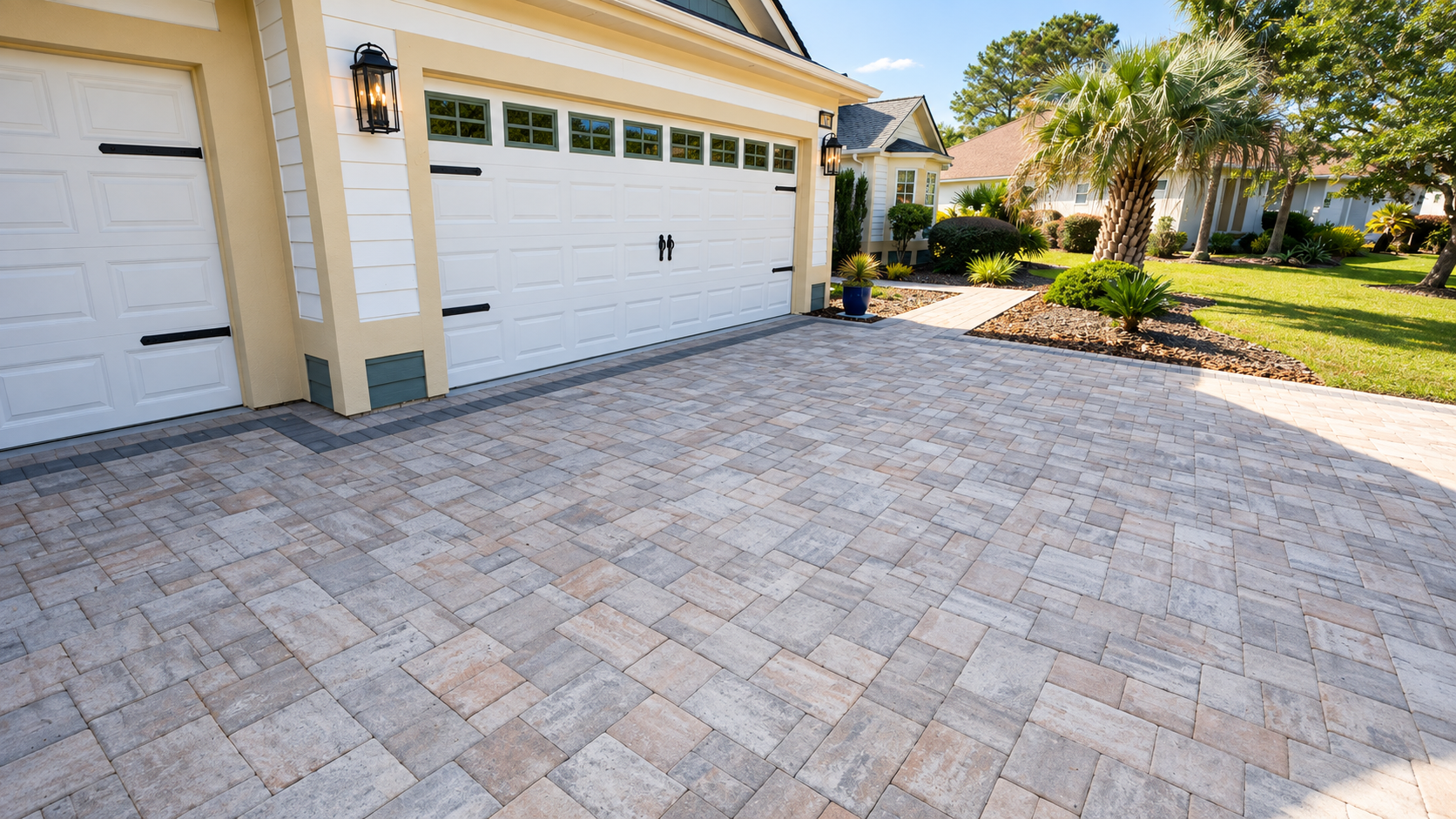
Your driveway is the first thing anyone sees before they even reach your front door, and in Lakeland, Florida's heat, sudden downpours, and sandy soil put that surface through more stress than most homeowners realize. If your concrete slab is already cracking, staining, or sinking in spots, you're not alone, it's one of the most common calls our crew gets from Lake Hollingsworth to South Lakeland. Driveway pavers in Lakeland, FL are becoming the go-to replacement because they're built to handle exactly these conditions, and in this guide you'll learn what they cost, how they compare to poured concrete, and what the installation process actually looks like from quote to final walkthrough.
How Much Do Driveway Pavers Cost in Lakeland?
The first question almost every homeowner asks is about the number on the invoice, so let's start there. Driveway pavers cost in Lakeland typically runs higher per square foot than plain poured concrete upfront, but the comparison changes once you factor in how long each surface actually lasts.
A few things move the price up or down on a Lakeland project:
- Size and shape of the driveway — a straight single-car driveway costs less per square foot than a curved, multi-car layout with cuts around landscaping.
- Paver material and pattern — standard concrete pavers in a running-bond pattern are the most budget-friendly; herringbone patterns and travertine or clay options cost more.
- Excavation depth — Central Florida's sandy soil sometimes needs extra base material to prevent settling, which affects labor time.
- Existing surface removal — tearing out an old, cracked concrete driveway adds to the scope before a single paver goes down.
Because every property is different, the most reliable way to get an accurate number is a site visit rather than a generic online estimate. AllBrick Pavers offers a free consultation and quote for Lakeland homeowners, and you can also run rough numbers first with our online cost calculator before committing to anything.
What most homeowners don't budget for is the long-term cost of concrete: seal-coating every few years, patching cracks, and eventually a full replacement. Paver driveways, by contrast, are designed for repair rather than replacement, if one paver cracks or stains, a crew lifts it out and drops in a new one, matching the surrounding pattern. That's a very different math problem than jackhammering out a slab.
Pavers vs. Concrete Driveways in Lakeland's Climate
Once cost is on the table, the next question is durability, and this is where the pavers vs. concrete driveway comparison gets interesting for anyone living through a Central Florida summer.
Poured concrete is a single rigid slab. When Lakeland's sandy soil shifts slightly, or when a summer thunderstorm saturates the ground and it expands and contracts, that slab has nowhere to give, it cracks. Interlocking pavers work differently. Each unit sits independently on a compacted base and bedding layer, so the whole surface flexes slightly as the ground moves underneath it instead of splitting.
The strength numbers back this up. Industry specifications set by the Interlocking Concrete Pavement Institute require concrete pavers to meet a minimum average compressive strength of roughly 8,000 PSI, compared with the 3,000–4,000 PSI typical of standard poured concrete driveways. Pavers also absorb noticeably less water than poured concrete, which matters in a region that sees frequent, heavy rain, less absorption means less freeze-thaw-style stress on the material and less staining from standing water.
Compressive strength. Poured concrete typically reaches about 3,000-4,000 PSI, while interlocking pavers reach around 8,000 PSI.
Cracks from ground movement. Cracking is common with poured concrete. Pavers rarely crack because they flex with the soil instead of splitting.
Repair method. A damaged concrete slab has to be patched or replaced. With pavers, you can lift and swap only the affected units.
Design options. Poured concrete is limited, mostly plain or stamped. Pavers come in a wide range of colors, shapes, and patterns.
Typical lifespan. Poured concrete usually lasts 15-25 years, while pavers can last 25-50+ years with proper care.
There's also the everyday reality of a Lakeland summer: a plain gray driveway absorbs and holds heat, which is uncomfortable underfoot and can even soften asphalt-adjacent materials. Pavers come in lighter tones and textured finishes that stay more comfortable and hide everyday tire marks and pollen dust far better than smooth concrete.
What to Expect During Driveway Paver Installation
Understanding the driveway paver installation process helps set realistic expectations for timeline and disruption before work begins.
- Design consultation. A crew member walks your property, discusses paver style, color, and pattern, and measures the space.
- Demolition and excavation. The old concrete or asphalt is removed, and the area is excavated to the correct depth for a stable base, this step matters more than most people expect, since a shallow base is the number one cause of pavers shifting or sinking later.
- Base compaction. Crushed aggregate is laid in layers and compacted to create a solid foundation that can support vehicle weight.
- Sand bedding and paver placement. A leveling layer of sand goes down, then pavers are set by hand in the chosen pattern, cut precisely around edges and landscaping features.
- Joint sand and compaction. Polymeric sand is swept into the joints and the whole surface is compacted with a plate vibrator, locking every paver into place.
- Final walkthrough. The crew cleans the site and walks the finished driveway with you before calling the job complete.
For a standard residential driveway, most projects run 3–5 days from demolition to completion, weather permitting. Because AllBrick Pavers uses one in-house crew for the entire job, no subcontractors, the same team that quoted your project is the same team installing it, which keeps communication and workmanship consistent from start to finish.
Frequently Asked Questions
How long do paver driveways last in Florida?
With proper installation and basic maintenance like periodic sealing, a paver driveway in a climate like Lakeland's typically lasts 25 to 50 years, significantly outperforming a standard poured concrete driveway.
Can pavers handle the weight of trucks and RVs?
Yes. Interlocking pavers are engineered for high compressive strength, and a properly installed base can support the weight of trucks, boats, and RVs without cracking, unlike thinner poured concrete surfaces.
Do driveway pavers need to be sealed?
Sealing isn't strictly required, but it's recommended every few years to protect against stains, enhance color, and make joint sand last longer, especially with Central Florida's rain and UV exposure.
Will my new driveway crack like my old concrete one did?
It's extremely unlikely if the base is installed correctly. Because pavers flex as a unit instead of acting as one rigid slab, they're far more resistant to the ground movement that caused your concrete driveway to crack in the first place.
Conclusion
A cracked, faded concrete driveway doesn't just hurt curb appeal, it's usually a sign the surface is nearing the end of its useful life. Driveway pavers in Lakeland, FL give homeowners a stronger, more repairable, and better-looking alternative that's built specifically to handle sandy soil, summer storms, and daily vehicle traffic without the recurring cracks and patch jobs. If your driveway is showing its age, the AllBrick Pavers team can walk your property, talk through design options, and put together a clear, honest quote, no subcontractors, no surprises. Contact us today to schedule your free consultation, or explore more ideas on our driveway pavers service page.

About Rael Lara
Rael Lara is the founder of AllBrick Pavers, Central Florida's leading paver contractor, transforming outdoor spaces with precision and lasting quality since 2018.